


Mad’in Europe CRAFTING CHANGE AWARD
Meet the Winners!

The Crafting Change Award, awarded by Mad’in Europe as part of the TREMPLIN initiative coordinated by BeCraft, celebrates emerging designer-makers among students participating in the 2025–2026 TREMPLIN Exhibition. The award recognises projects that bring together craftsmanship, design and making, opening up new ways of thinking about materials, techniques and creative processes.
Dimensions Chanvre by Aimie Hainaud
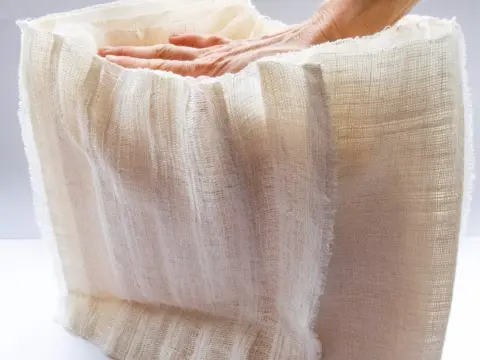
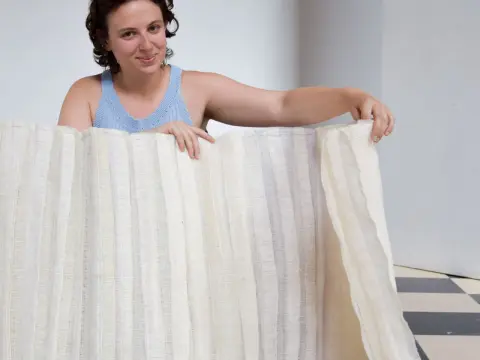
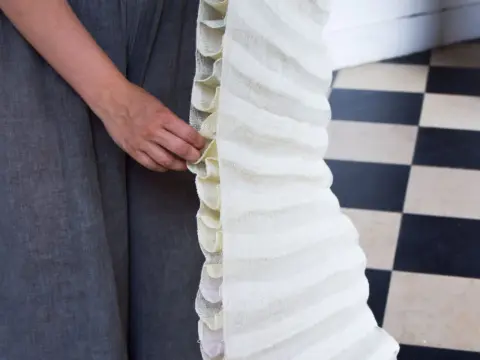
Dimensions Chanvre explores the creative potential and versatility of hemp. Aimie transforms its fibres into three-dimensional, self-supporting textile structures. Through hands-on experimentation and a sensitive dialogue with the material, she challenges conventional ways of working and using hemp while embracing locally sourced, sustainable resources.
Assemblance by Florian Delmotte
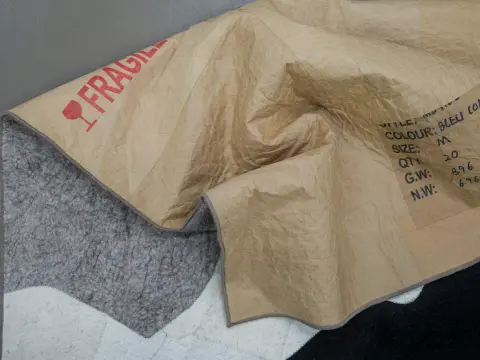
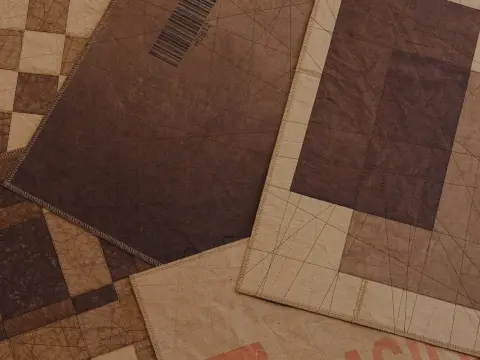
In Assemblance, Florian Delmotte explores the potential of wool felt offcuts and discarded cardboard collected from the streets of Brussels. Drawing on textile-crafting gestures and techniques, he cuts, assembles, softens, dyes and transforms the materials into new tactile surfaces. His work challenges conventional ideas of material value, showing how making can give discarded resources a new purpose and lifespan.

Les récits de l’entre-deux by Noa Rémond
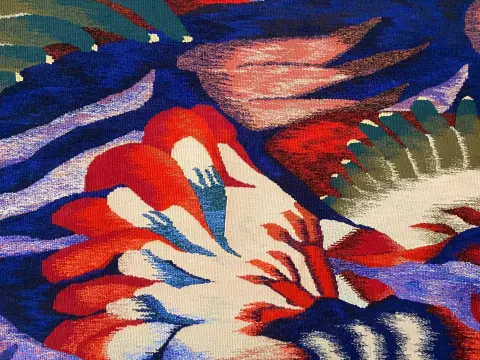
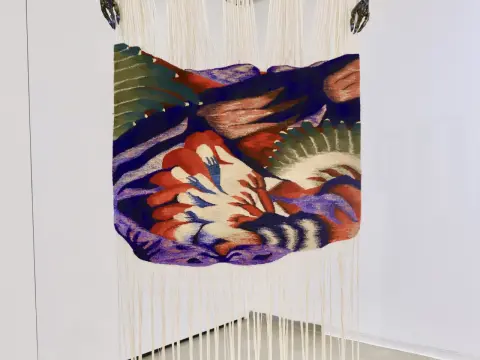
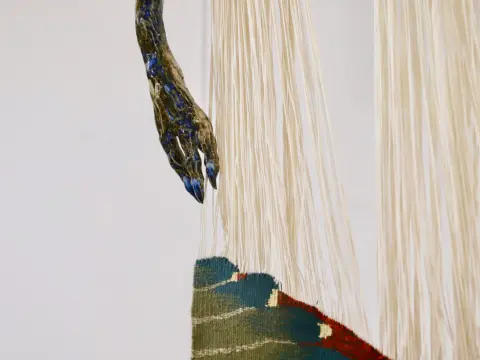
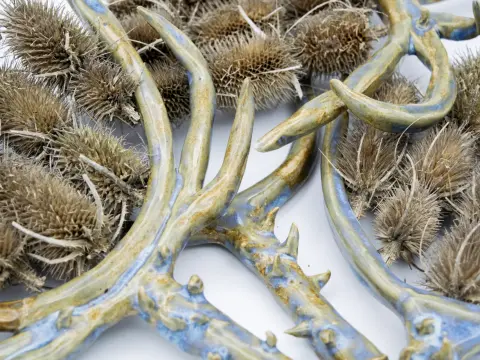
Les récits de l’entre-deux brings together tapestry, wood sculpture and ceramics to explore the fluid boundaries between human beings, nature and materials. Emerging from immersive collaborations with master artisans and traditional spinning mills, Noa’s poetic works reinterpret heritage tools, techniques and gestures, transforming them into a multidisciplinary art form.
About the Award
Mad’in Europe is proud to join the TREMPLIN initiative, coordinated by BeCraft, and to present the Crafting Change Award, inviting graduating students from the 2025–2026 academic year participating in the TREMPLIN Exhibition to apply.
The award celebrates a new generation of designer-makers who imagine, develop and shape their work through a close relationship with materials, techniques and craftsmanship.
At Mad’in Europe, we believe that design and making are inseparable. Understanding materials, gestures, techniques and processes shapes design, just as design can open new possibilities for traditional and contemporary craft practices. Craft is also built on knowledge and transmission: skills acquired through practice, experimentation and exchange can become powerful creative resources from which to reinterpret, innovate and create.
Today, designer-makers are also confronted with questions about what and how we produce, the resources we use, the lifespan and value of objects, the conditions in which they are made, and the knowledge and skills we choose to preserve and transmit.
The Crafting Change Award recognises projects that engage with these questions through the interaction of craft, design and making. Projects will be evaluated through three complementary dimensions: MAKE, LEARN and CHANGE.
This award is for tudents participating in the Tremplin project only.
Criteria for Selection
Submitted projects will be evaluated through three complementary criteria: MAKE, LEARN and CHANGE. These consider respectively how making and craft knowledge shape the design, how learning and knowledge transmission enrich the project and its final outcome, and how the project uses craft and design to contribute to positive environmental, social, cultural or ethical change.
MAKE: How does making shape your design?
Projects should demonstrate a strong relationship between design and making, showing how materials, techniques, tools and processes have informed creative decisions. Making should not simply execute a predefined idea: experimentation, material properties, technical possibilities and knowledge gained through practice should actively contribute to the development of the design.
Your direct involvement in making is fundamental. This includes your own hands-on work and skills, as well as your ability to recognise when specialised craft knowledge is needed and to engage with the appropriate master artisan or workshop. In such collaborations, the artisan should not simply execute the design but contribute expertise that opens new possibilities, solutions or perspectives.
MAKE therefore values both the ability to make and the ability to work intelligently with the knowledge of others, recognising craft know-how as an active part of the creative and design process.
LEARN: What did you learn through making, and how did it transform your design?
Making is also a process of learning, discovery and experimentation. The jury will consider what new knowledge you acquired during the project, whether through your own hands-on experimentation or through exchanges with master artisans, craft teachers, technicians or specialised workshops, and how this knowledge influenced its development and final design.
What did this learning make possible? Did it change your understanding of a material or technique, challenge an initial idea, solve a technical or creative problem, or reveal an unexpected direction? The jury will look at how acquired knowledge enriched the project and contributed to its final outcome.
LEARN therefore values transmission and learning as creative resources: knowledge that enables you to explore new directions, question your own ideas and develop your skills.
CHANGE: How can your project contribute to a different way of making, using, understanding, valuing or transmitting?
Craft and design can contribute to change through choices about materials and sourcing, production, collaboration, durability and repairability, and the way skills and knowledge are valued and transmitted.
The jury will consider the project’s environmental, social, cultural and ethical engagement and how these considerations have influenced its design and making choices. Change may come through responsible materials, circular approaches, fair collaboration, community engagement, local production, or the preservation and reinterpretation of craft skills and knowledge.
Change does not need to be radical or large-scale. The jury will look at how the project questions or improves existing ways of designing, making, using, understanding, valuing or transmitting, within its own context and scale.
CHANGE therefore values the ability to turn environmental, social, cultural and ethical awareness into meaningful choices, recognising craft and design as powerful means to question existing practices and contribute to more responsible ways of making and living.
What can you win?
Three projects will receive the Crafting Change Award, recognising emerging designer-makers whose work best embodies MAKE, LEARN and CHANGE.
Each winner will receive a permanent free membership of the Mad’in Europe portal, with a dedicated professional profile presenting their work, skills and projects to a European and international audience.
Each will also be featured in a dedicated interview, published on their profile and promoted in four languages through Mad’in Europe’s communication and social media channels. This will give the winners visibility beyond their awarded project and connect them with Mad’in Europe’s European network of craftspeople, workshops, schools, cultural organisations and other craft and heritage stakeholders.
The winners will be invited to present their work and exchange ideas within the CRAFTWISE network during an Online Exchange Event. This session will allow the winners to show their projects, exchange ideas, and connect with craft professionals, project experts, and European peers from Turkey, Romania, Spain, and Greece. The exchange provides the winners a unique chance to immerse themselves in CRAFTWISE, a European project dedicated to empowering the next generation of makers by exploring collaboration between craftsmanship and design and bridging traditional craftsmanship with contemporary design practices.
***Beyond the three main awards, all applicants will have the opportunity to participate in some CRAFTWISE project activities.
How to apply?
Fill in the Google Form HERE by 11 October 2026 at midnight, Brussels time.
European Jury Board

Sibel Aksu Güngör, after a 15-year career in architecture, Sibel pursued an MBA in Art Management and a Ph.D. in Anthropology, focusing her research on the practice and culture of collecting. Her doctoral dissertation, The Collective and Individual Aspects of Idiocentric Collecting, was based on five years of fieldwork exploring the relationship between cognitive processes, culture and the material world through an interdisciplinary approach. Sibel lectured on Anthropological Theory, Psychological and Cognitive Anthropology in undergraduate and graduate programmes at various universities in Turkiye. Alongside presenting her research at international conferences, she has published articles and led seminars on non-academic platforms to make academic knowledge accessible to a wider audience. In 2018, she founded PUHU Research & Consultancy, where she designs and implements social innovation projects that connect cognitive processes with social issues. Her interest in material culture and cultural heritage naturally extends to crafts: through Erasmus+ projects such as CRAFTWISE, she works to bring young people together with crafts professionals and to keep traditional knowledge alive across generations.

Carlo Cazzaniga is an artist, master artisan, and freelance writer with over four decades of independent practice rooted in a dialogue between matter, form, and memory. Guided by manual skill, fretwork, and sculpture, his creative output translates cultural heritage, sports history, and narrative archives into physical wooden reliefs, with works housed in international institutions including the Assisi Museum of Memory (Italy), and the Cosme Damião Museum in Lisbon. Alongside his art studio, he spent over twenty years running custom glass and metal workshops. His work combined traditional craft techniques, patented designs, and sustainable local production. A dedicated advocate for knowledge transfer and the value of manual labor, Cazzaniga has published extensively across print and digital media, including D’A Rivista di Artigianato ed arti applicate and Il Sole 24 Ore. His career reflects a deep commitment to social responsibility and craft advocacy, recognised by the “Prime di copertina” Award at the International Museum of Ceramics in Faenza.

Madina Benvenuti is the founder and Managing Director of Mad’in Europe. Her 25-year career in media, press agencies, and digital transformation across France and Italy includes founding agencies such as Planet and Photonica, managing the well-known press agency Webistan, and advising major media groups including Hachette and Corbis. In 2013, she decided to fully dedicate her attention to the European crafts sector, founding Mad’in Europe to champion its revitalization. Under her leadership, Mad’in Europe has grown from a networking platform for European artisans into a dynamic, multifaceted initiative. She coordinates several EU-supported projects (including CRAFTOUR, MindCrafts, BRICKS etc.) funded by programs such as Erasmus+ and Horizon Europe, advancing policy development, skills transmission, innovation, and economic resilience of the sector. As an active member of European networks including the European Crafts Alliance, Heritage Alliance, and INTBAU, she passionately advocates for driving cross-disciplinary collaboration to demonstrate how crafts can innovate and contribute to diverse sectors.

Jelena Krivokapic has a background in graphic and industrial design, architecture, and holds an M.A. in World Heritage Studies, a UNESCO program at BTU Cottbus-Senftenberg, Germany. Passionate about the intersection of tangible and intangible cultural heritage, her thesis and research focus on the connection between traditional building crafts, belief systems, and architectural structures as physical demonstrations of craft skills and cultural traditions. She has worked as a Research Assistant at the Chair of Architectural Conservation at the BTU Cottbus-Senftenberg and completed internships with US/ICOMOS, ESACH (now Youth.Heritage.Europe), and Europa Nostra. She is also an active member of ICOMOS Serbia. Since September 2022, Jelena has been part of the Mad’in Europe team, gaining extensive knowledge and insight into the European crafts sector while building strong expertise in managing European projects.
A collaboration


 Brussels, Belgium

