Open in new tab - Back to search results
library

Interweaving Nature

Category

Newsletters

Publication date

29/05/2026

As exploed through the CRAEFT project, in which Mad’in Europe is a partner, hand gestures and material interactions in crafts can be understood through four main categories: adding, subtracting, transforming, and interlocking. Techniques such as weaving, knotting, braiding, binding, or interlacing belong to this last category, where flexible elements are assembled through rhythm, repetition, and the movement of the hands.

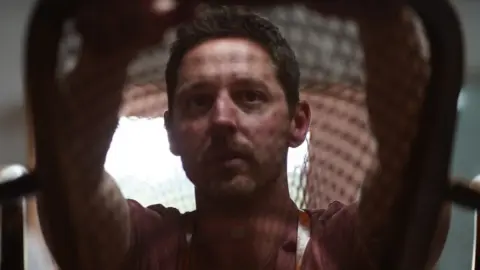
The video from the CRAEFT YouTube channel introduces the gesture of interlocking, highlighting how craftspeople bring separate elements together through weaving, braiding, knotting, and other techniques.

As World Environment Day approaches, this edition of the newsletter focuses on the relationship between hand dexterity, embodied knowledge, and interweaving natural materials. Willow, wicker, roots, straw, and grass are among the most locally available raw materials across Europe, and their properties have shaped a wide variety of techniques, objects, and regional craft traditions. Through continuous negotiation between hand and material, craftspeople transform these organic elements into functional or decorative forms while preserving a deep understanding of natural cycles, resistance, flexibility, and resourcefulness. These practices also raise a question:

What can we create with the resources that already exist around us?

Looking at traditional craft knowledge may not only help us understand the past, but also inspire more sustainable ways of designing and producing in the future.

Every woven object begins long before the first gesture. It starts in fields, wetlands, forests, and riverbanks, where the fibres used by basket makers have been gathered and cultivated for generations. In the following article, we explore the origins of some of Europe’s most widely used weaving materials and the knowledge required to transform them from natural resources into objects of everyday life.

Fibres : from the field to the hand
Read our article here

Basket-making and cane weaving reveal how simple, but precise and repeated gestures can generate an extraordinary diversity of forms, textures, and uses. From functional baskets and seating to contemporary decorative pieces, these practices continue to evolve through artisans who reinterpret traditional techniques in their own way.

Keep scrolling and discover basket makers, cane weavers, and craftspeople from different European countries whose work explores natural fibres through distinct materials, gestures, and creative approaches.

Espartero de Plata

Based in the Sierra de Gata region, Spain, Ángel Avis combines traditional esparto weaving with contemporary sculptural work. Through handcrafted baskets, woven objects, blinds, and environmental-themed sculptures, he preserves ancestral fibre-weaving techniques while promoting the transmission of traditional knowledge through workshops and education.
L’Art du Cannage

Working with natural cane and traditional caning techniques, Loïc Ravaux, based in Cysoing, in the Hauts-de-France region of northern France, restores and creates handwoven seating that preserves the gestures and precision of this interlacing craft.

Wonders of Willow
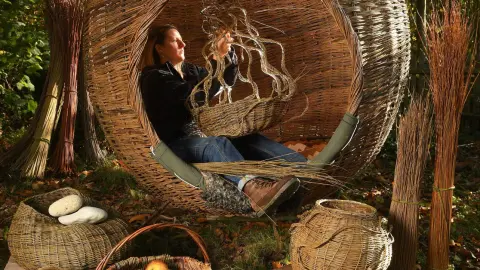
Based in rural Ireland, in the village of Dromahair, Helen Munday creates handcrafted willow baskets using self-harvested natural materials and traditional weaving techniques closely connected to seasonality, sustainability, and everyday life.

Kosashvili’s Basket Weaving Workshop
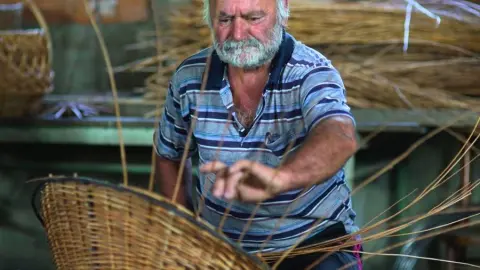
In the Georgian village of Kvemo Gomi, the Kosashvili family preserves traditional basket-weaving techniques through handcrafted willow baskets, woven objects, and furniture rooted in local knowledge and rural life. Through family transmission and public masterclasses, the workshop contributes to keeping Georgian basketry heritage alive across generations.

Sonia Lekuona Studio

In the white spanish village of Mijas, Sonia Lekuona preserves and reinterprets the ancient craft of esparto weaving through craftsmanship, teaching, and archaeological research connected to the traditions of Andalusia.

Regina Białk

Working with pine and juniper roots, Regina Białk, based in Kościerzyna, in Poland, preserves traditional Kashubian plaiting techniques through intricate handcrafted objects shaped by rural knowledge and generations of transmission.

KamiKaa

Through painting, basketry, calligraphy, and traditional crafts, Kamila combines artistic practice with inclusive education. Based in the region of Kashubia, Poland, she develops workshops and creative activities that make craft accessible to children, seniors, and people with diverse needs.

Interested in exploring these gestures yourself?
Or simply discovering these practices more closely?

Many craftspeople open their own workshops to share their techniques and knowledge, alongside organisations, festivals, and learning initiatives dedicated to basket-making, cane weaving, and natural fibre crafts across Europe.

Salon des Métiers d’Art – Osiez Vous l’Art ?!
Basketry Festival 
📍Fayl-Billot, France
4-5 July 2026

The Salon “Osier, l’Art et la Matière” is one of France’s leading events dedicated to basketry and willow craftsmanship. Organised by the Comité Français de la Vannerie, the fair brings together professional basketmakers, artisans, artists and enthusiasts to celebrate the diversity, creativity and contemporary relevance of wicker and basketry. Through exhibitions, demonstrations, workshops and meetings with makers, the event highlights both traditional know-how and innovative approaches to working with willow and natural fibres, offering visitors a unique opportunity to discover the richness of this craft and the expertise behind it.

VI Światowy Festiwal Wikliny i Plecionkarstwa
6th World Wicker and Weaving Festival
📍Nowy Tomśl, Poland
3 – 6 September 2026

The Polish Festival of Wicker and Weaving celebrates the rich traditions and contemporary expressions of wicker craftsmanship in Poland. Bringing together artisans, workshops, exhibitions, demonstrations, and cultural activities, the festival offers visitors the opportunity to discover the diversity of weaving practices and the creative potential of natural fibres. Rooted in a long regional tradition of wicker work, the event also highlights how basket-making continues to evolve through contemporary design, artistic experimentation, and the transmission of manual knowledge.

Fira Internacional del Cistell de Salt
Salt International Basket Fair
📍Salt, Spain
3 – 4 October 2026

The Salt International Basket Fair, held in Catalonia, is one of Europe’s leading events dedicated to basket-making and plant fibre crafts. Bringing together artisans, workshops, demonstrations, and exhibitions from different countries, the fair celebrates both traditional weaving techniques and contemporary creative approaches linked to natural materials and basketry traditions.

Beyond festivals and public events, many organizations across Europe play a key role in preserving, teaching, and reinventing basketball traditions. Through training activities, workshops, research, and community initiatives, they help ensure that weaving knowledge continues to be shared across generations and adapted to contemporary contexts.

The Serfenta Association

📍Cieszyn, Poland

Through workshops, research, and international exchanges, the Serfenta Association works to preserve and reinvent basketry as both a craft tradition and a contemporary collective experience. Based in Poland, the organisation connects weaving practices with transmission, nature, and cultural exchange across generations and borders.

Puerta del Ágora

📍Mijas, Spain

Based in Mijas, Andalusia, Puerta del Ágora is an artisan cooperative combining shared workshops and craft education through classes in esparto weaving, leatherwork, ceramics, jewellery, and traditional crafts, including esparto workshops led by Sonia Lekuona herself. You can find out more about the workshop here: Introduction to Basket Weaving.

From willow fields to woven seats, from rural traditions to contemporary design studios, these artisans and their practices reveal how deeply craftsmanship remains connected to nature, memory, and human creativity.

Through the simple movement of the hands, natural fibres become objects, stories, and shared knowledge passed from one generation to another. In rediscovering these gestures, we may also rediscover more sustainable and meaningful ways of creating, learning, and living.

News from Mad'in Europe

Mad’in Europe is a partner in the European project CRAFTWISE, funded by Erasmus+, which aims to strengthen skills in the craft sector and encourage collaboration between craftspeople and young designers and design students.

 Reskiling crafts: Follow the progress of the Reskilling Crafts project here 


BRICKS: Join us on 18 June for the dissemination event of the BRICKS project. The event will bring together practitioners, educators, and stakeholders to discuss the role of non-formal craft education, share project results, and explore future perspectives for skills transmission and lifelong learning in the craft sector.

📅 18 June | 16:00–17:30
📍 Florence, Italy & online

You can find out more about the event here.

Related resources

Beyond the Object: Jewellery, Craft, and Responsibility

Jewellery asks to be admired, but it also deserves to be questioned Before it becomes…

The Belgian Way of Crafting

While Belgium might be seen as the ‘office’ of the EU, there is a much…
CRAFTOUR

CRAFTOUR: Bringing crafts to the European Union Agenda

CRAFTOUR : 75 partners, 21 countries, one vision CRAFTOUR is a European initiative, coordinated by…
paper

Newsletter: The versatility of paper

Paper is a material we encounter every day, yet its cultural depth and creative potential…

Invite a friend