

In the age of digital media and instantaneity, it is often forgotten that printing and engraving were, for centuries, profoundly human endeavors. Long before modern printers, women and men drew, carved wood or metal, inked matrices, adjusted presses, and printed sheet after sheet in order to circulate ideas, images, and stories. Each phase required precision and experience: a poorly engraved mark or an incorrectly adjusted pressure could not be erased. These gestures, transmitted over the centuries, have shaped our relationship with paper, books, images, and more broadly with knowledge itself. Even today, printers, engravers, and conservator-restorers perpetuate these forms of expertise in their workshops. To better understand their work, it is often enough to learn how to observe paper: every technique leaves recognizable traces.
Woodcut: Relief Printing Technique
Woodcut is one of the oldest techniques in the history of printing. The artist carves a wooden block by removing the parts that should not print and leaving in relief those areas intended to receive the ink. The ink is applied to the raised surfaces and then transferred onto paper through pressure. The result is characterized by strong contrasts, large black areas, and a drawing that is often angular or strongly graphic. The paper generally remains flat, without visible indentations. This technique requires a remarkable capacity for anticipation: what is carved away disappears forever. It forms the basis of Western printing and is still used today for its direct expressive power.
First observe the contrasts: woodcut privileges black and white, often with extensive dark areas. Lines appear bold, sometimes sharp-edged, and the drawing has a strongly graphic character. Running your gaze, or your finger, across the surface, the paper usually looks or feels smooth, without grooves or impressions. It is an image born through subtraction: what you see is what has remained in relief on the block.
Vesalius’ De humani corporis fabrica, plate 164. Original scanned page from 1543 editio, woodcut.
Götz von Berlichingen, Zweihundert Bildnisse und Lebensabrisse berühmter deutscher Männer, 1870.
Intaglio Printing: Ink in the Grooves
In intaglio printing, the artist incises a metal plate, most often copper. The ink settles into the grooves and is transferred to paper by means of a very powerful press. An important clue for recognizing this technique is the presence of a rectangular mark around the image, the impression of the metal plate. Engraving with a burin produces very fine, sharp, and regular lines, conveying a sense of precision and rigor. The gesture is direct and irreversible: the metal is cut without the possibility of correction, making the work long and demanding.
Etching offers greater expressive freedom. The drawing is traced onto a plate protected by a varnish, then acid bites into the metal. The resulting lines are softer and more spontaneous, similar to pen drawing, with variations in line intensity. With drypoint, the metal is scratched rather than removed. A burr forms that holds the ink and produces slightly blurred, velvety lines with an intimate and delicate effect. Because of the fragility of this burr, the number of impressions is generally limited.
Look closely at the edge of the image: a rectangular impression is often visible in the paper, the trace of the metal plate. The lines appear engraved and may be slightly raised on the reverse of the sheet. The image seems to sink into the paper rather than rest on its surface. The paper may appear slightly wavy or marked by the strong pressure of the press.
- In burin engraving, lines are thin, regular, and controlled, producing an effect of great precision.
- In etching, the line is more pictorial, free, and vibrant, similar to pen drawing, with variations in intensity.
- In drypoint, the lines appear soft and slightly blurred, with a velvety and intimate effect due to the fragility of the engraved mark.
The Great Hunt, 1619. Etching by Jacques Callot.
Pandora Opening the Jar, or Allegory of Light, 16th century. Etching and engraving.
Lithography: Printing Without Relief
Lithography works without grooves or relief. It is based on the principle that water and grease repel each other. The drawing is made with greasy materials on a stone or plate, which is then treated and printed. The paper shows no evident impressions. The image appears very “drawn,” similar to pencil or wash, with well-distributed colors. For these characteristics, lithography has been widely used for posters, illustrated newspapers, and popular images.
The paper shows no impressions or relief. The image has a strongly drawn appearance, similar to pencil, charcoal, or wash. Tonal transitions are soft and continuous, and colors are evenly distributed. On close inspection, the mark appears to rest on the surface rather than penetrate the paper.

Carrefour de St Jean et Paul. Dans l’Opéra Marino Faliero – Picture of Act II. Lithograph in color.
Screen Printing: Color Passing Through the Mesh
Screen printing is a printing technique based on forcing ink through a fabric stretched on a frame, historically silk and today often synthetic fibers. The image is created by blocking areas that should not print using masks or photosensitive emulsions; the ink, pushed with a squeegee, passes only through the open areas of the mesh and is deposited onto the paper. Unlike engraving techniques, screen printing does not leave impressions in the paper. What is perceived above all is the presence of ink on the surface: solid color fields, intense and uniform colors, sharp and graphic edges. Sometimes a slight texture of the mesh is visible. Because of these characteristics, screen printing played a central role in twentieth-century graphic design, posters, and art editions, becoming an autonomous expressive language. Gianpaolo Fallani tells us a little about how he uses this technique.
Observe the color: it is often full, saturated, and uniform. The ink lies on the surface of the paper and may sometimes create a slight thickness perceptible to the touch. The edges of shapes are sharp and graphic. In some cases, a faint regular texture can be seen, the trace of the mesh used for printing. surface rather than penetrate the paper.
Screen printing in production at Gianpaolo Fallani’s studio, Fallani Venezia.
A macro photo of a screen print with a photographically produced stencil. Photo 2005 by J-E Nyström
Letterpress Printing: Text in Relief
Letterpress printing, developed in the fifteenth century by Johannes Gutenberg, is based on the use of raised characters, initially in wood and later in metal. Inked and pressed onto paper, these characters reproduce text with great clarity, often leaving a slight impression perceptible to the touch. This texture, together with the regularity of the letters, is one of the distinctive features of traditional letterpress printing, which profoundly shaped the history of the book and the dissemination of knowledge. An emblematic example of this tradition is the workshop of the Plantin-Moretus family, active in Antwerp between the sixteenth and seventeenth centuries, where letterpress printing reached levels of technical, cultural, and editorial excellence still visible today in the spaces and collections of the Museum Plantin-Moretus.
Look at the letters against the light or gently run a finger over the text: the letters may leave a slight impression on the paper. The characters are very sharp and regular, with precise alignment. The printing appears “pressed” into the sheet, giving the surface a subtle but recognizable texture.
Excerpts from the photographic collection of the Plantin-Moretus Collection.
Recognizing Techniques to Recognize Human Labour
Recognizing a printing or engraving technique does not simply mean identifying a process, but acknowledging the human labour that accompanies it. Every printed image is the result of choices, precise gestures, and long apprenticeship. In an era in which innovation allows printing ever faster, these forms of knowledge remind us of the importance of time, material, and transmission. The crafts of printing and engraving are not relics of the past, but living practices that embody another way of creating and viewing images. In this context, one cannot ignore the increasingly accelerated and often unconscious relationship we have with digital images. Their overproduction and constant consumption risk making them ephemeral and interchangeable, destined to be seen and forgotten in a matter of moments. Paper, by contrast, imposes a different temporality: it requires attention, presence, and care. A printed image does not scroll past, does not update, does not disappear with a gesture; it occupies space, has weight, a surface, and a vulnerability. Rediscovering paper therefore means rethinking how we look, preserve, and attribute value to images, preparing our gaze to understand their fragility and the need for protection.

Paper manufacuring, illustration to Diderot’s Encyclopédie 18th century.
Paper and the Care of Memory

Paper is one of the most important, yet most fragile, materials in the cultural history of humanity. Through sheets, books, prints, and documents, thought, art, and knowledge have been transmitted over time. Precisely because of its organic nature, paper is vulnerable to light, fire, humidity, pollution, use, and the simple passage of time, making its preservation a constant challenge for every civilization.
Paper originated in China at the beginning of the second century CE, traditionally attributed to Cai Lun. The first sheets were made from plant fibers such as hemp, mulberry bark, rags, and fishing nets, reduced to pulp and then dried. This new support, lighter and more economical than bamboo, silk, or parchment, allowed an unprecedented diffusion of writing and administration, laying the material foundations of bureaucracy and written culture in East Asia.
In this context, hanji, the traditional Korean paper made from mulberry bark fibers, assumes particular importance. Its significance does not lie in the invention of printing techniques, but in the extraordinary durability of the material. In East Asia, where woodblock printing and later metal movable type were widespread centuries before Europe, paper quality was a decisive technological factor. Hanji, thanks to its long fibers, resistance to humidity and insects, and refined artisanal production methods, made large-scale production and long-term preservation of religious texts, administrative documents, and books possible. In this sense, it differs both from early Chinese papers and from pre-industrial European papers, which were based mainly on textile fibers such as linen and cotton, demonstrating how the material support was as crucial as the printing techniques themselves.
The spread of paper to the Islamic world and then to Europe (from the twelfth century onward) brought further transformations: medieval paper mills emerged, animal gelatin sizing was introduced, and paper gradually became the ideal support for movable-type printing. Between the eighteenth and nineteenth centuries, with the Industrial Revolution, the scarcity of rags encouraged the shift to wood as the primary source of cellulose, initiating mass production and making paper an everyday material.
Today, paper is produced mainly from wood pulp, often sourced from controlled supply chains or recycling, while research aims to improve its sustainability and durability. The recognition of the hanji tradition as cultural heritage, promoted also by UNESCO, ultimately underscores how artisanal knowledge and materials science have been, and continue to be, fundamental elements in the history of information transmission, alongside major technological innovations.
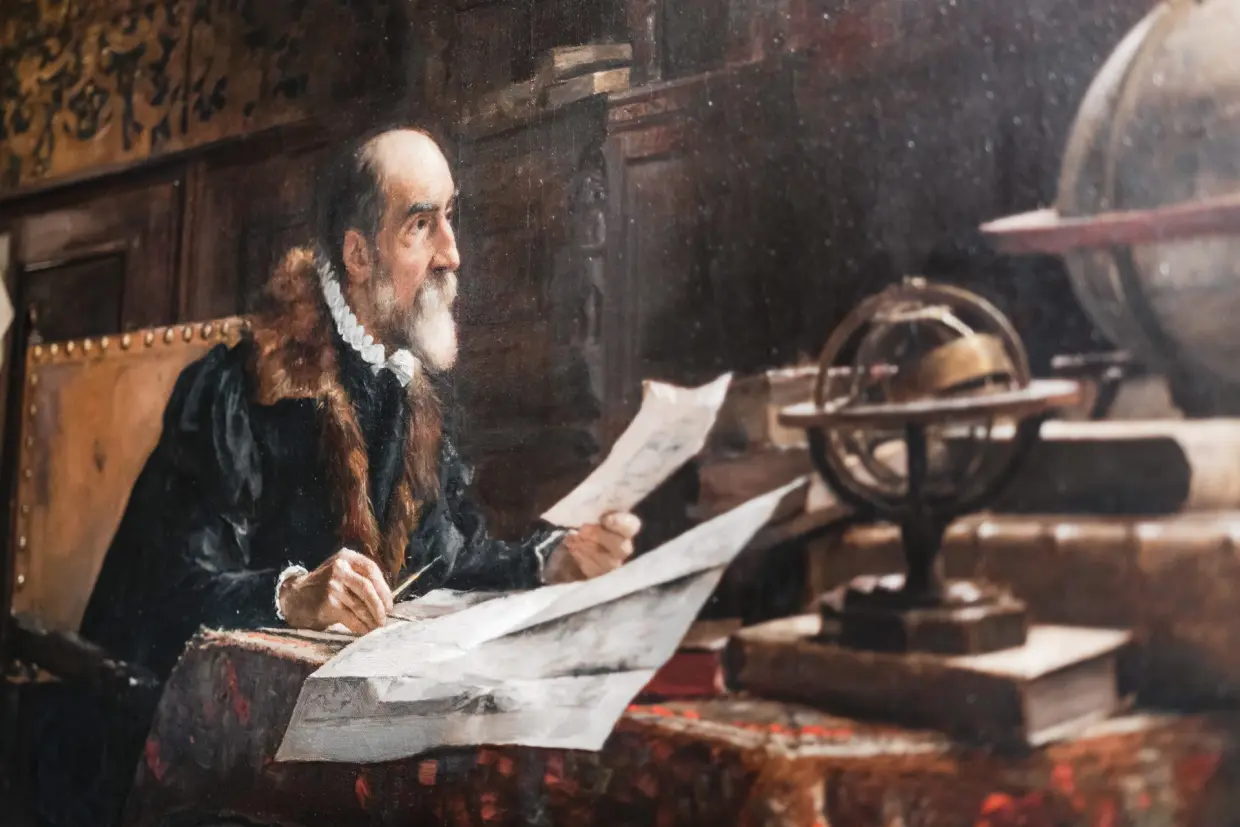
Abraham Ortelius in his study, 1887, Edouard De Jans. Collection of the Museum Plantin-Moretus, Antwerp
Restoring Without Erasing Time
Restoring a paper artifact does not mean making it new, but understanding its material history and accompanying it through time. For this reason, the training of a conservator combines theoretical study, laboratory practice, and direct experience. The study of the history of paper and printing is fundamental for recognizing techniques and materials. The teaching activity of Nella Poggi fits within this perspective, placing at its center the link between historical knowledge and practical intervention.
Every restoration begins with observation. The object is analyzed to understand its materials, inks, pigments, and alterations. Interventions, from cleaning to deacidification, from controlled humidification to repairs using thin and resistant Japanese papers, are always calibrated and reversible. At their core lie shared ethical principles: minimal intervention, reversibility, and respect for authenticity, as affirmed by Cesare Brandi’s theory of restoration.
Alongside restoration, preventive conservation plays an essential role: appropriate environmental conditions and good practices can prevent much damage. Paper restoration is thus a silent and profoundly human endeavor, a dialogue between past and present. Caring for paper means caring for memory, so that it may continue to speak to future generations.
Example of a restoration carried out on the globe of Pope John XXIII, by Nella Poggi
Essential Bibliography
- Brandi, C., Theory of Restoration, Einaudi, Turin, 1963.
- Federici, C., The Conservation of Library and Archival Materials, Nardini, Florence, 1993.
- Hunter, D., Papermaking: The History and Technique of an Ancient Craft, Dover Publications, New York, 1978.
- ICCROM, Conservation of Paper and Textiles, Rome, various contributions.
- ICOM-CC, Terminology to Characterize the Conservation of Tangible Cultural Heritage, 2008.
- Poggi, N., Teaching and Instruction in the History of Paper and Printing, materials and university courses.


