Open in new tab - Back to search results

Aran Accessories

General presentation

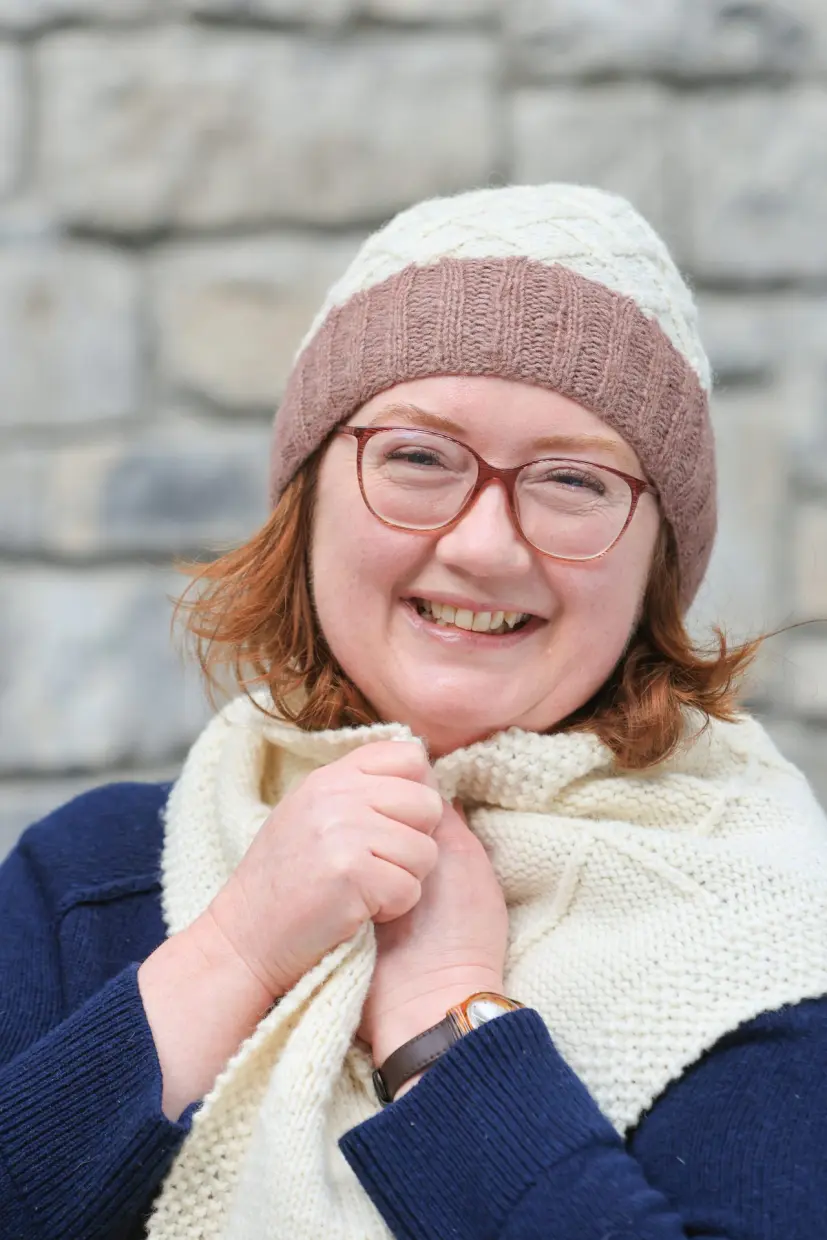
Máirín Ní Dhonncha is a knitter and knitting pattern designer from the smallest of Ireland’s Aran Islands, Inis Oírr. She creates patterns which try to marry the Islands’ strong knitting heritage (e.g. cables, Aran knitting) with newer techniques (such as circular knitting) to provide original knitting designs.

“Coming from an area with a strong knitting heritage, the Aran Islands, we learnt to knit relatively young – I remember knitting my first jumper at the age of 9. Knitting always struck me as a thoroughly enjoyable craft, where you are creating the textile at the same time as you are creating the item of clothing (or homeware). When I first opened an online shop, I preferred selling my own original knits, instead of designs that others had created. It was a logical step to start creating knitting patterns, so that others could recreate my designs. While I love working with a variety of yarns, it is particularly rewarding to work with Irish wool, which marries well with the Aran knitting style. I also love bringing in elements of other knitting traditions, (e.g. Vikkel braids from Estonia) to help create new knitting designs. Another love of mine is teaching knitting to children, which I have been doing in my local school for over 10 years now”. 

Máirín Ní Dhonncha est une tricoteuse et créatrice de modèles de tricot originaire de la plus petite des îles d’Aran, en Irlande : Inis Oírr. Elle crée des modèles qui cherchent à marier la riche tradition locale du tricot (comme les torsades et le style Aran) avec des techniques plus modernes (telles que le tricot circulaire), afin de proposer des créations originales.

« Issue d’une région au fort héritage lié au tricot, les îles d’Aran, nous avons appris à tricoter très jeunes – je me souviens avoir tricoté mon premier pull à l’âge de 9 ans. Le tricot m’a toujours semblé être un artisanat profondément agréable, dans lequel on crée le textile en même temps que le vêtement (ou l’objet de décoration). Lorsque j’ai ouvert ma boutique en ligne, j’ai préféré vendre mes propres créations plutôt que de tricoter des modèles conçus par d’autres. Il m’a donc semblé naturel de commencer à créer des patrons, pour que d’autres puissent reproduire mes designs.

Même si j’aime travailler avec une grande variété de fils, c’est particulièrement gratifiant d’utiliser de la laine irlandaise, qui se marie à merveille avec le style Aran. J’aime aussi intégrer des éléments d’autres traditions textiles, comme par exemple les torsades Vikkel d’Estonie, pour enrichir mes créations. Une autre de mes passions est l’enseignement du tricot aux enfants, ce que je fais depuis plus de dix ans dans l’école de mon village. »

Máirín Ní Dhonncha es una tejedora y diseñadora de patrones de tejido originaria de la isla más pequeña de las Islas Aran, Inis Oírr, en Irlanda. Crea patrones que buscan unir la fuerte herencia local del tejido (como los relieves trenzados y el estilo Aran) con técnicas más modernas (como el tejido circular), para ofrecer diseños originales.

« Procedente de una zona con una gran tradición en el arte del tejido, las Islas Aran, aprendimos a tejer desde muy jóvenes —recuerdo haber tejido mi primer jersey a los 9 años—. Siempre me ha parecido un oficio muy gratificante, ya que al tejer estás creando el tejido al mismo tiempo que la prenda (o el objeto decorativo). Cuando abrí mi tienda en línea, preferí vender mis propios diseños originales en lugar de tejer modelos creados por otras personas. Así que el siguiente paso lógico fue empezar a diseñar mis propios patrones, para que otras personas pudieran recrearlos.

Aunque me gusta trabajar con una gran variedad de lanas, resulta especialmente satisfactorio utilizar lana irlandesa, que encaja perfectamente con el estilo Aran. También disfruto incorporando elementos de otras tradiciones textiles, como las trenzas Vikkel de Estonia, para enriquecer mis diseños. Otra de mis pasiones es enseñar a tejer a niños y niñas, algo que hago desde hace más de diez años en la escuela de mi localidad. »

Máirín Ní Dhonncha è una magliaia e designer di modelli per maglia proveniente dalla più piccola delle isole Aran in Irlanda, Inis Oírr. Crea modelli che cercano di unire la forte tradizione dell’arte della maglia delle isole (come i motivi a trecce e la lavorazione Aran) con tecniche più moderne (come la lavorazione circolare) per offrire design originali.

“Provenendo da una zona con una forte tradizione legata alla maglia, le isole Aran, abbiamo imparato a lavorare a maglia abbastanza presto – ricordo di aver realizzato il mio primo maglione a 9 anni. Lavorare a maglia mi è sempre sembrato un mestiere estremamente piacevole, in cui si crea il tessuto contemporaneamente al capo di abbigliamento (o all’oggetto per la casa). Quando ho aperto il mio negozio online, ho preferito vendere i miei lavori originali, invece di realizzare modelli ideati da altri. È stato un passaggio naturale iniziare a creare dei modelli, così che altre persone potessero riprodurre i miei design.

Sebbene ami lavorare con una grande varietà di filati, è particolarmente gratificante usare la lana irlandese, che si sposa perfettamente con lo stile Aran. Mi piace anche integrare elementi provenienti da altre tradizioni, come ad esempio le trecce Vikkel dell’Estonia, per contribuire a creare modelli nuovi. Un’altra mia grande passione è insegnare maglia ai bambini, attività che porto avanti da oltre dieci anni nella scuola del mio villaggio.


Is cniotálaí agus dearthóir patrúin cniotála í Máirín Ní Dhonncha a thagann as an gceann is lú d’Oileáin Árann na hÉireann, Inis Oírr. Cruthaíonn sí pátrúin a dhéanann iarracht tradidisiún láidir cniotála na n-oileán (m.sh. cáblaí, cniotáil Árann) a chur le teicnící an lae atá inniu ann (ar nós cniotáil ciorclach) chun dearaí úrnua a chur ar fáil.

Category

Business Areas

Professions

Products

Materials

Location

52 Belmont
Old Dublin Road
Galway
Irlanda
52 Belmont
Old Dublin Road
Galway
Irlanda

On the windswept island of Inis Oírr, Máirín Ní Dhonncha is not only preserving the Aran Islands’ knitting heritage- she’s also building something quietly powerful: confidence, creativity, and connection among the next generation.

As a knitter, pattern designer, and dedicated teacher, Máirín has spent over a decade leading children’s knitting classes for ages 6 to 13. Her approach blends skill-building with emotional support, offering young learners a unique ‘third space’ – a social, non-competitive environment where they can express themselves freely, gain confidence through making, and experience the joy of shared creativity.

From the gentle rhythm of yarn running through fingers to the creative challenge of crafting something entirely new, each stitch in Máirín’s world is a step toward learning, belonging, and self-expression. Her story reminds us that when we share our making, we spark inspiration in others – let’s read on.

I teach children’s knitting classes (ages 6–13) and have seen so many children benefit in different ways from learning to craft together.

For some, it’s about simple companionship, the glee of working alongside one another, not necessarily on the same project (or at the same level), but engaged in an activity they all enjoy. Some love to chat, others prefer quiet company, but practising together fosters a feeling of inclusion.

There’s great positivity in creating with your own hands. Several children have said, “I didn’t think I could do that!” That sense of achievement builds self-confidence. I always make a point of telling them whenever I (as the teacher)  learn a new technique too, we’re all crafting together. Some are further along on their journey, but we’re all learning and improving as we go.

Crafting is such a powerful way to combine creativity and problem-solving: How do I get to my end point? How do I know when I’ve reached it? Do I need to learn new skills to achieve my goal? These aren’t just mental exercises—they combine thought and handwork in (ideally!) a satisfying way.

Crafting & Learning Together: The Feeling of Inclusion

I was chatting with my oldest child about how the knitting class had gone one week, when they said, “Oh, it sounds like the knitting class is a ‘third space’!” They had been learning in college about the social value of ‘third spaces’ – places that are neither home nor school/work. For children, especially, there’s often a lack of these kinds of spaces, where they can socialise side-by-side, without pressure or competition.

This kind of relaxed companionship is incredibly beneficial to mental health. Interaction happens naturally because everyone is already engaged in a shared activity, but there’s no pressure to interact either. This can be especially helpful for neurodiverse children, there’s no need for small talk, but the shared focus on craft provides an easy topic of conversation if they want to join in.

Knitting, in particular, offers so many mindful benefits: the sensory pleasure of yarn through the fingers, the repetitive movements, the satisfaction of following or adapting a pattern, and the bonus of sanctioned fidgeting!

Positive Self-Confidence

In knitting class, children expect to learn to knit, but they’re often surprised when sewing comes into play! One of our first projects is a simple garter stitch bracelet or wristband, sewn together at the end. “But I don’t know how to sew!” they’ll say – followed quickly by, “That was easy!” when they realise it’s just about drawing both ends together.

It’s lovely to see their self-belief grow as they realise they can do far more than they thought. I always remind them that whatever they make is completely unique. Even if someone else in the world uses the same wool and needles, their creation will still be different, made by their hands, not someone else’s. In a world where so many things are mass-produced, being able to express individuality through a handmade item is incredibly valuable, no matter your age.

Creativity and Problem Solving

One of the more challenging (and fun!) parts of teaching is when a child comes up and says, “I want to knit a…” – something unique, often without a ready-made pattern I can refer to. Sometimes it’s a hat for a favourite toy, other times it’s a surprise gift for a new sibling (yikes!).

We chat together to figure out what we need: new yarn? Holes for Teddy’s ears? Do we need to make sure it’ll still fit after a growth spurt? Sometimes we adapt patterns; other times we make it up as we go. We don’t always finish in class, but I hope the process of exploring creativity, facing challenges, and solving problems is just as valuable as the final piece.

The Meaning Behind the Aran Knitting Tradition

The Aran Islands are renowned as the birthplace of the iconic Aran sweater, a garment rich in both history and symbolism. Developed over generations, Aran knitting is deeply intertwined with Celtic culture. Its roots can be traced as far back as the Book of Kells, where illustrations appear to depict early versions of what we now recognise as the Aran jumper.

Each stitch in Aran knitting tells a story or holds symbolic meaning:

  • Moss Stitch – Symbolises abundance and growth
  • Blackberry Stitch – Reflects the beauty and complexity of nature
  • Honeycomb Stitch – A lucky stitch, representing hard work and plenty
  • Lattice or Basket Stitch – Inspired by traditional wicker baskets, symbolising community and provision
  • Ladder of Life / Tree of Life – Reflect life’s journey, from roots to growth and connection
  • Diamond Stitch – A wish for success, prosperity, and treasure

These time-honoured patterns carry more than just aesthetic beauty, they embody generations of tradition, storytelling, and a deep respect for the land and people of the Aran Islands. 

Related professionals

Lorna McCormack

  • Crafts Professionals
  • Textile
  • Ratoath, Ireland
  • Graduated professional

Fordefurniture

  • Noel Forde
  • Crafts Professionals
  • Conservation-Restoration of Cultural Heritage +3
  • Castlebar, Ireland

Aoife Harrison Design

  • Aoife Harrison
  • Crafts Professionals
  • Fashion & accessories +1
  • Dublin, Ireland

Invite a friend

Contact details

    Loading...