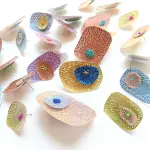
 1 Like


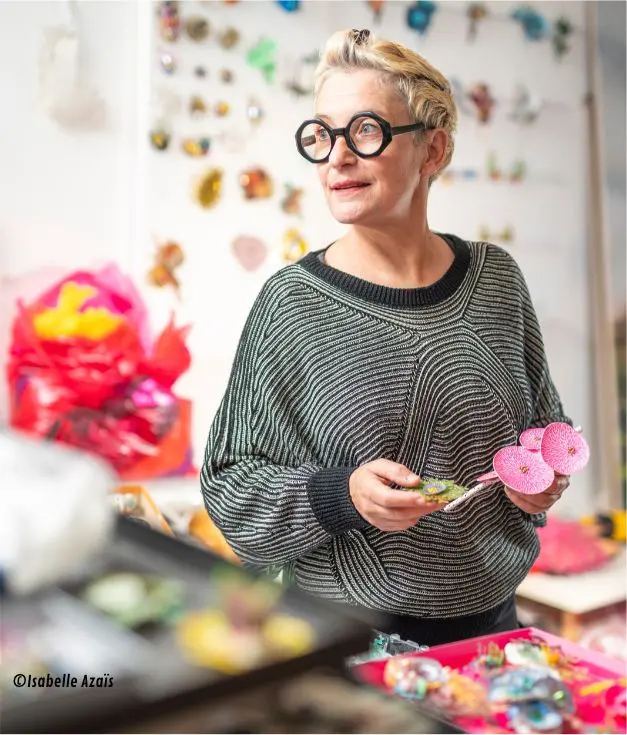


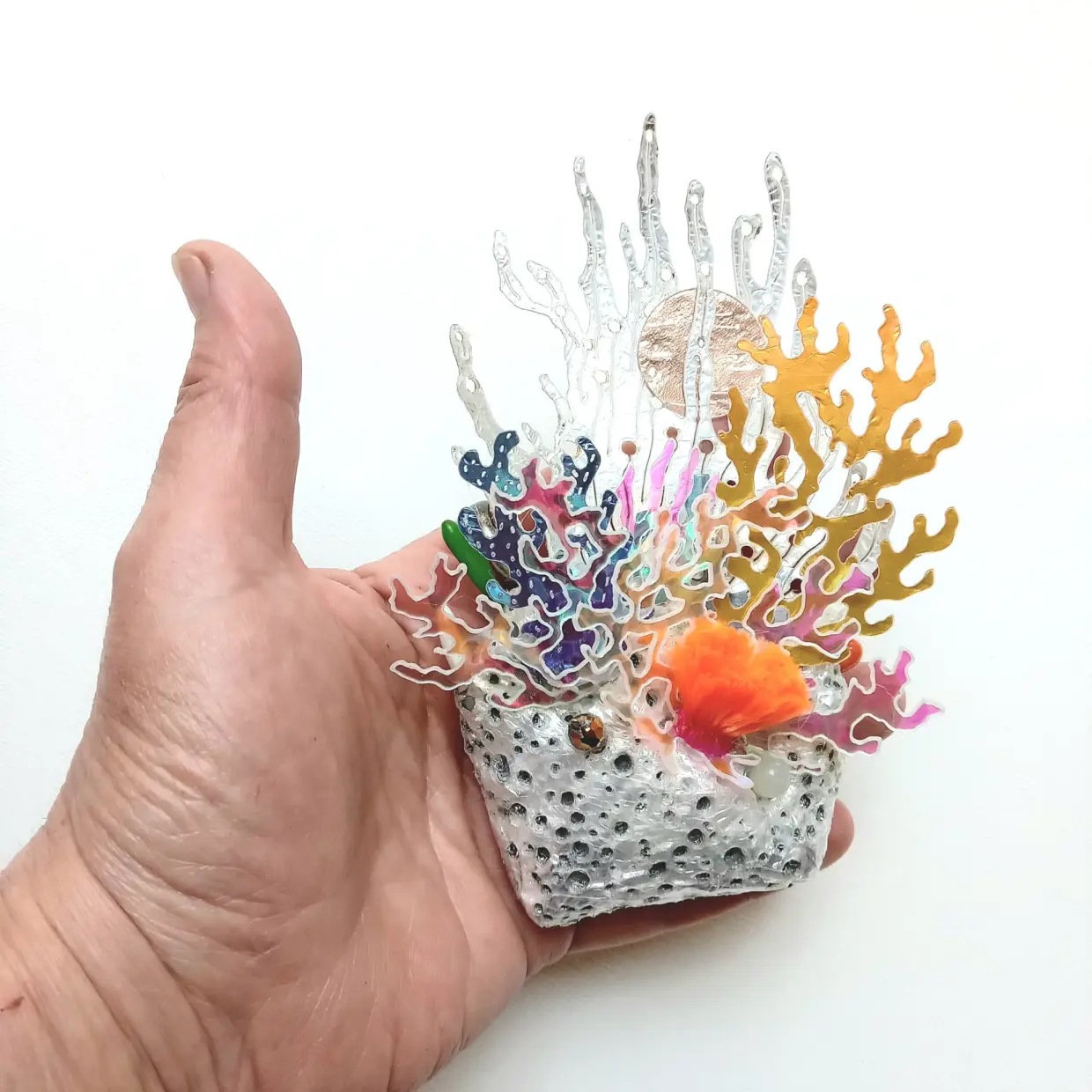
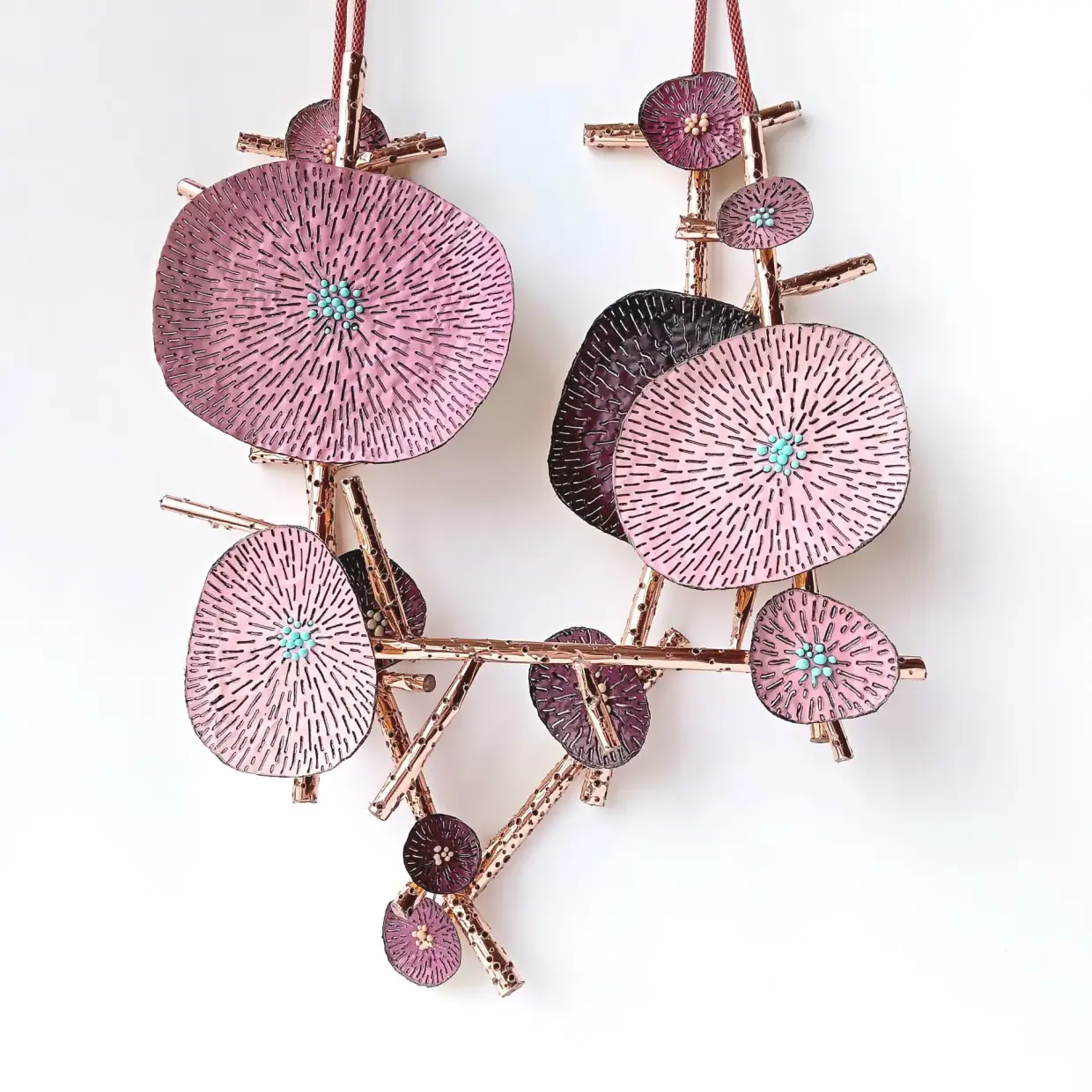
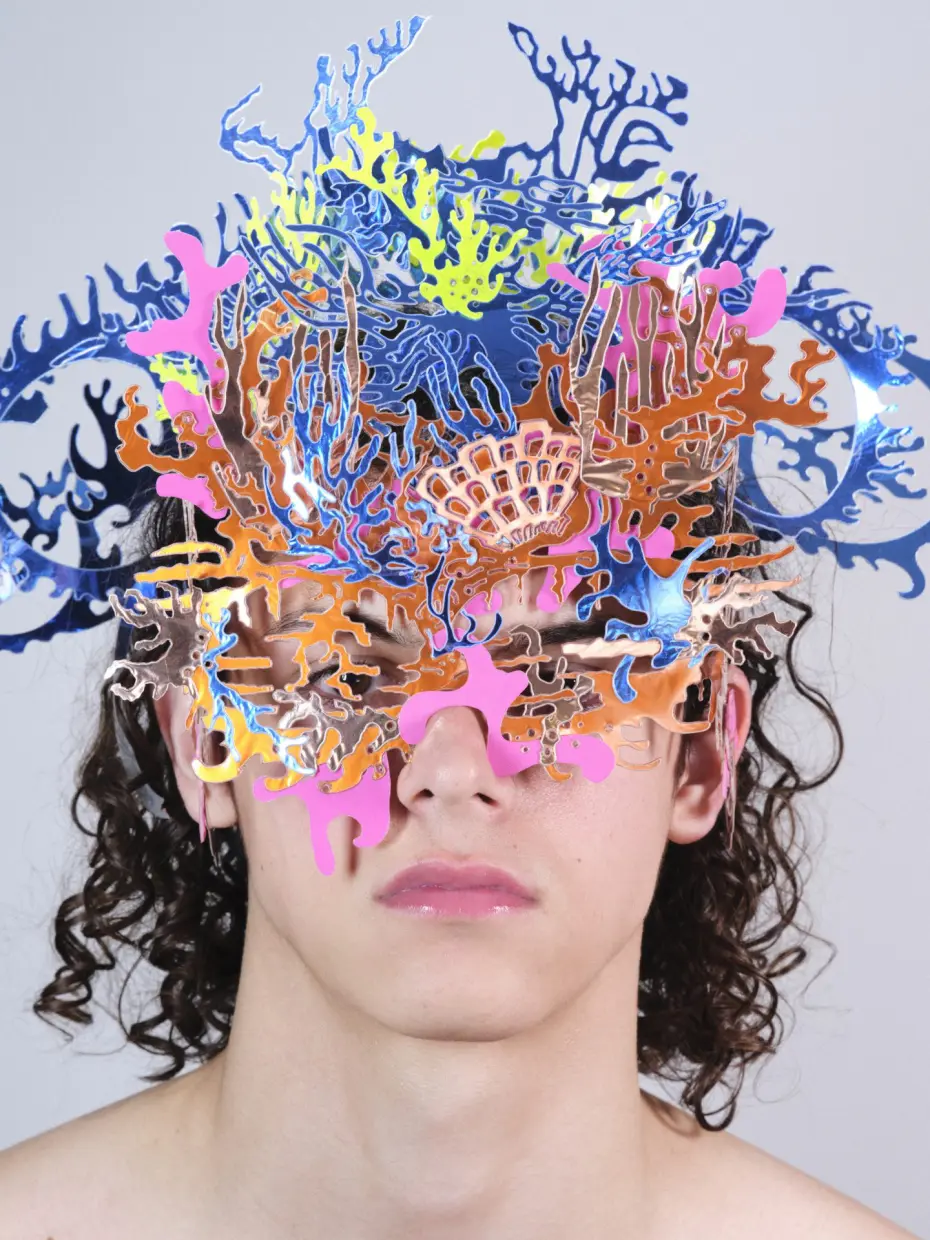
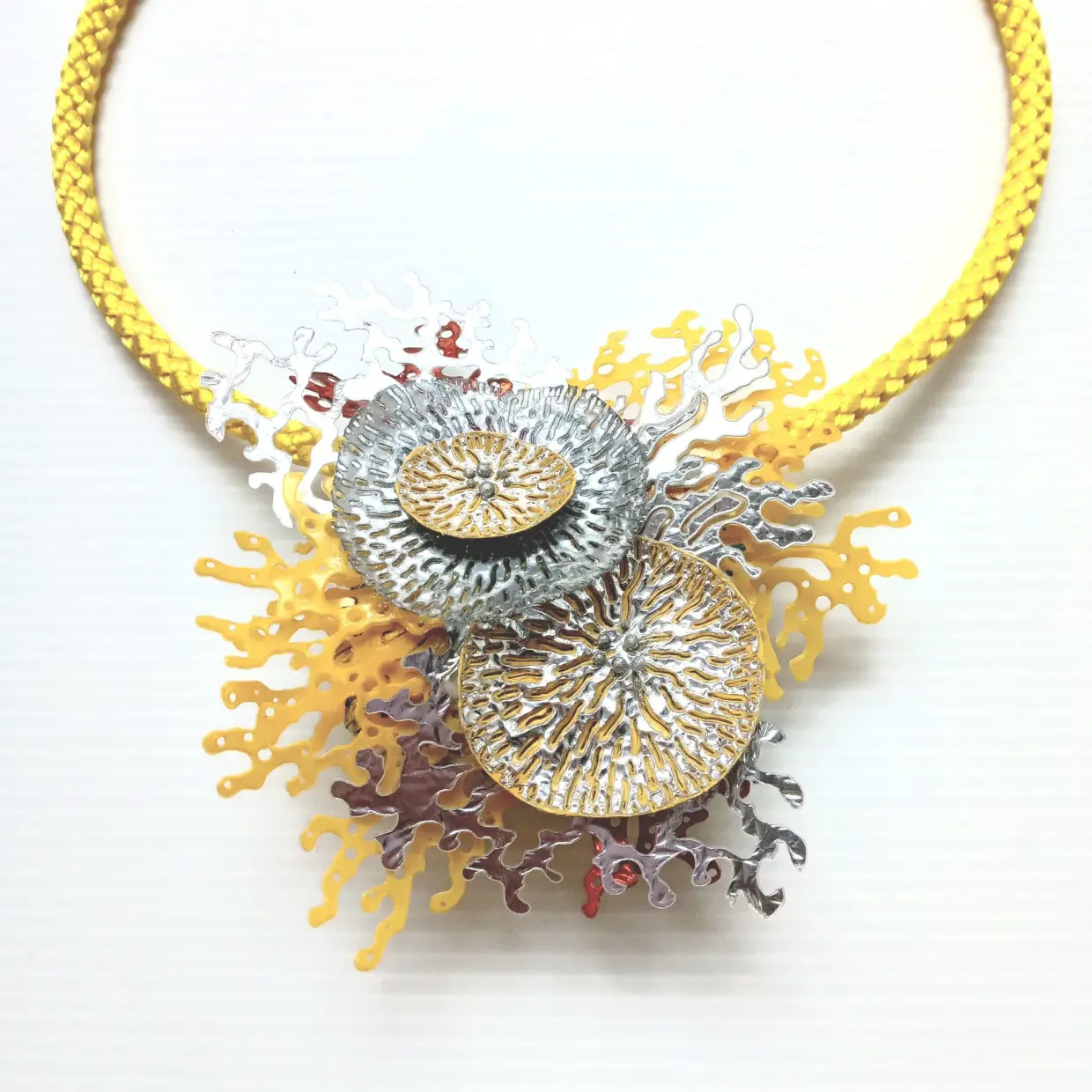
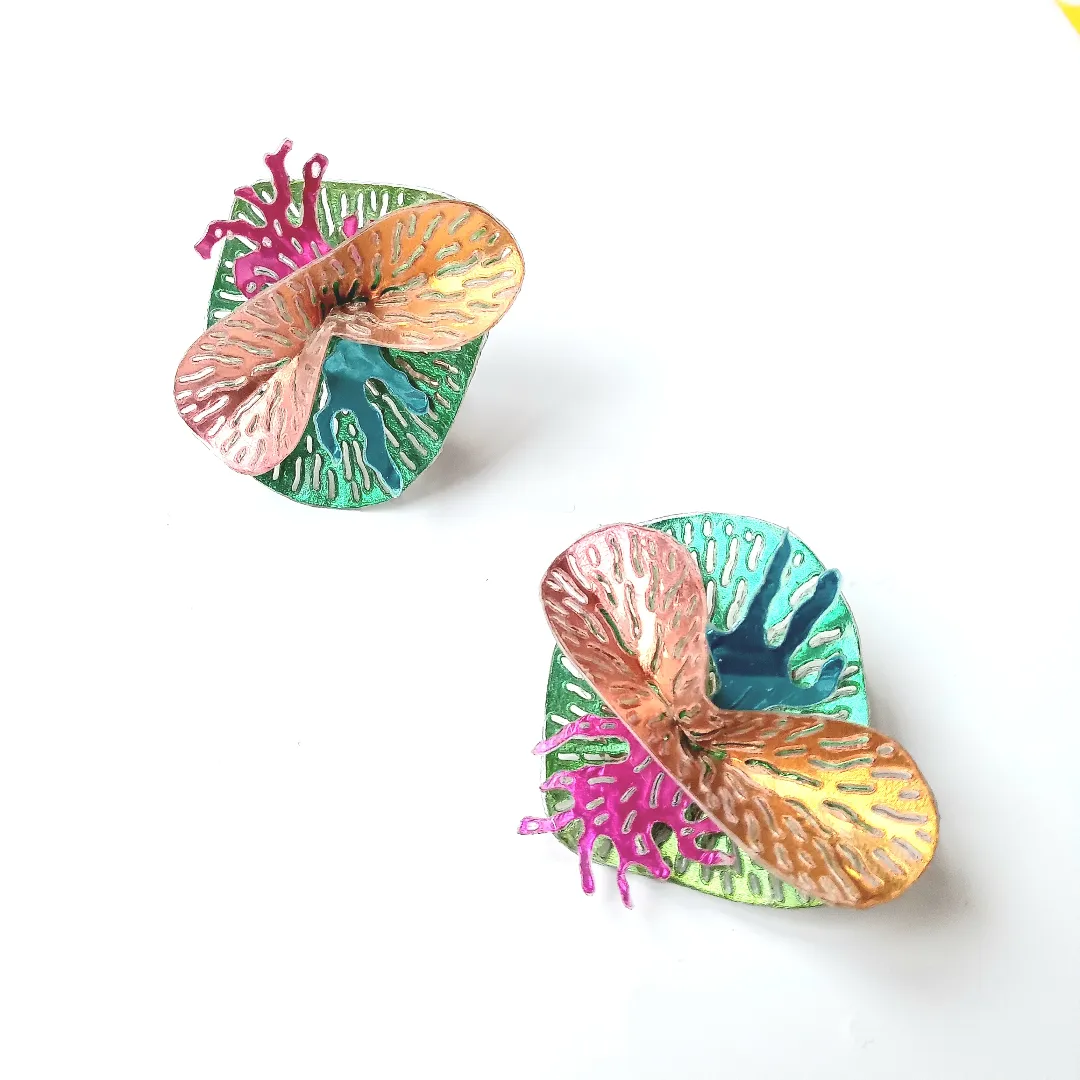
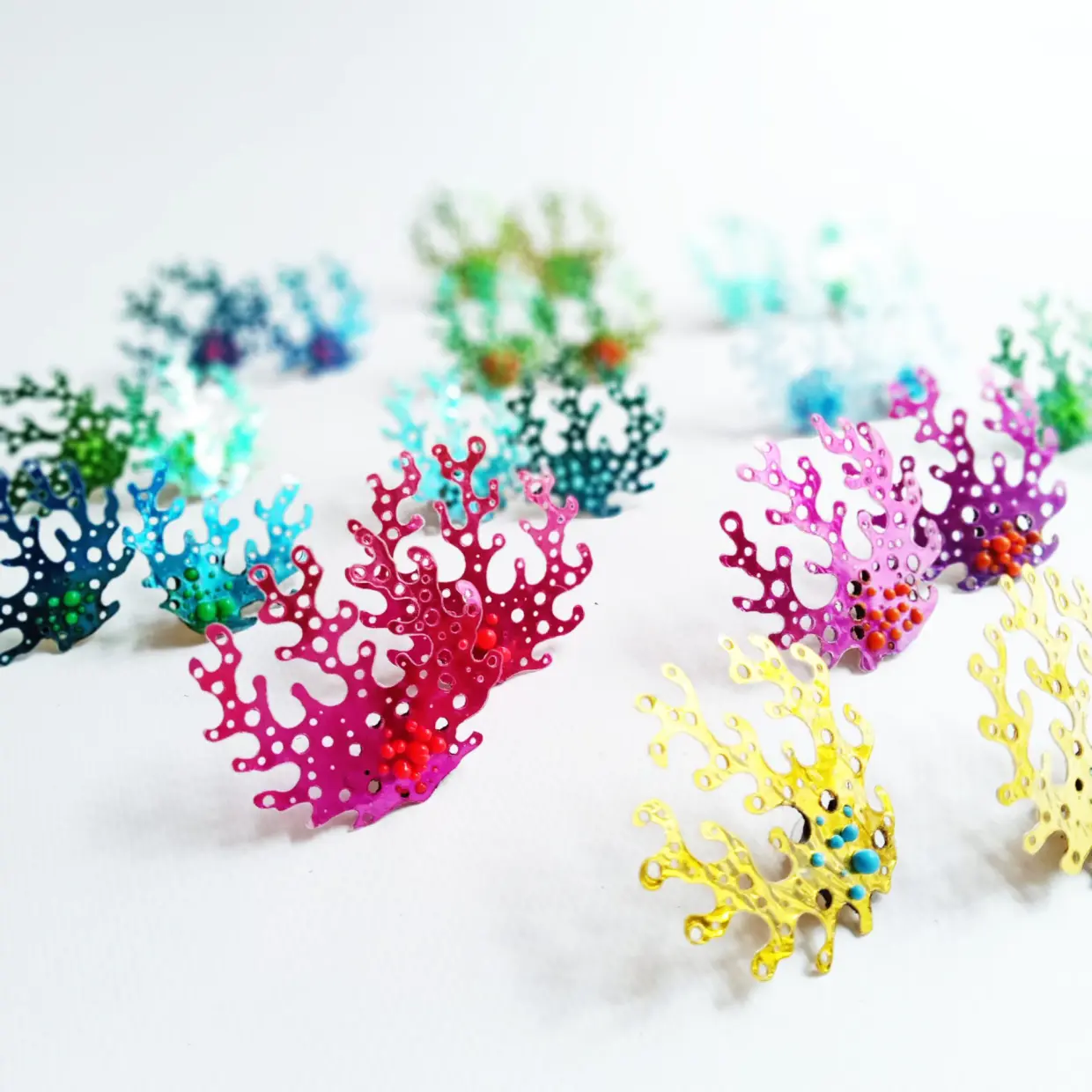
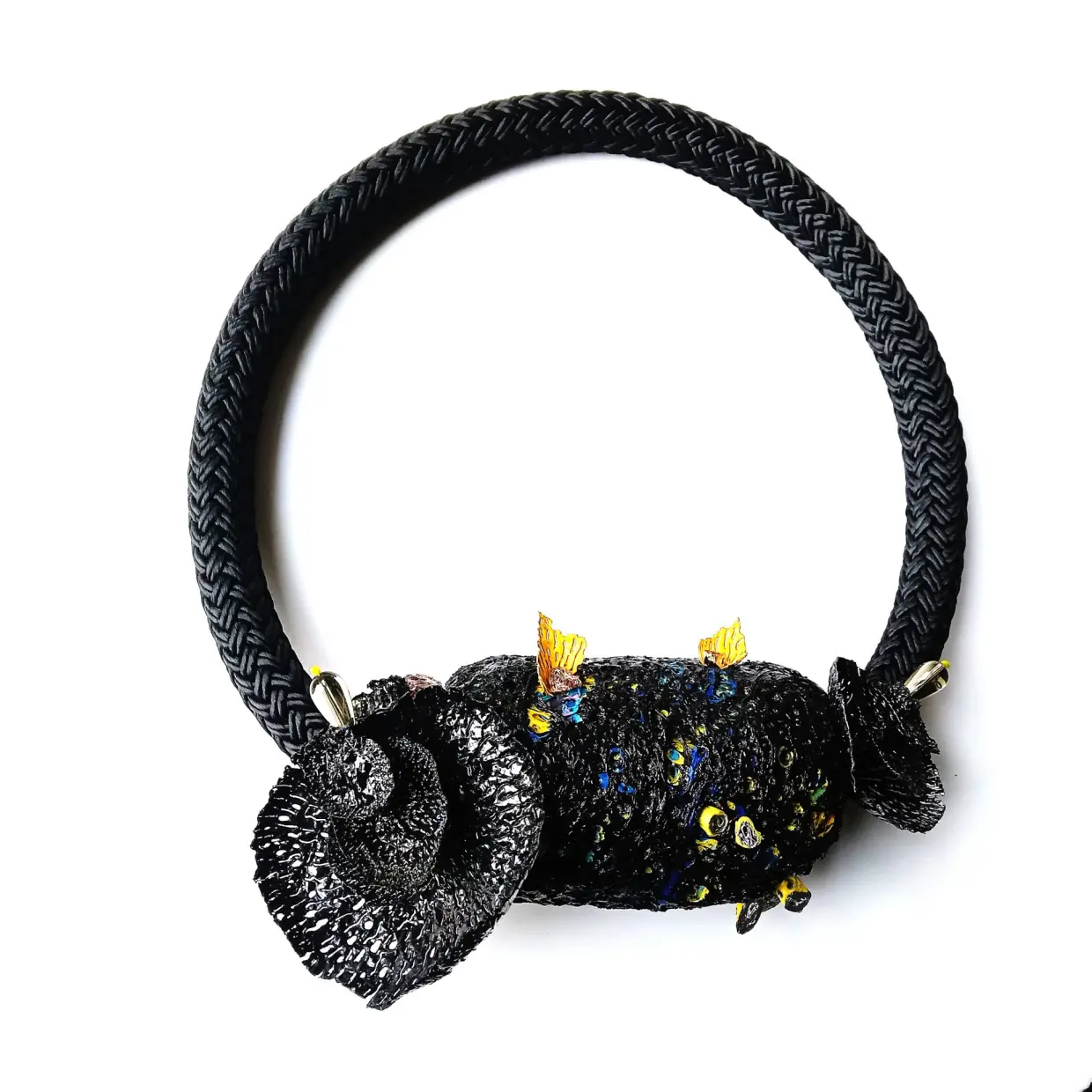
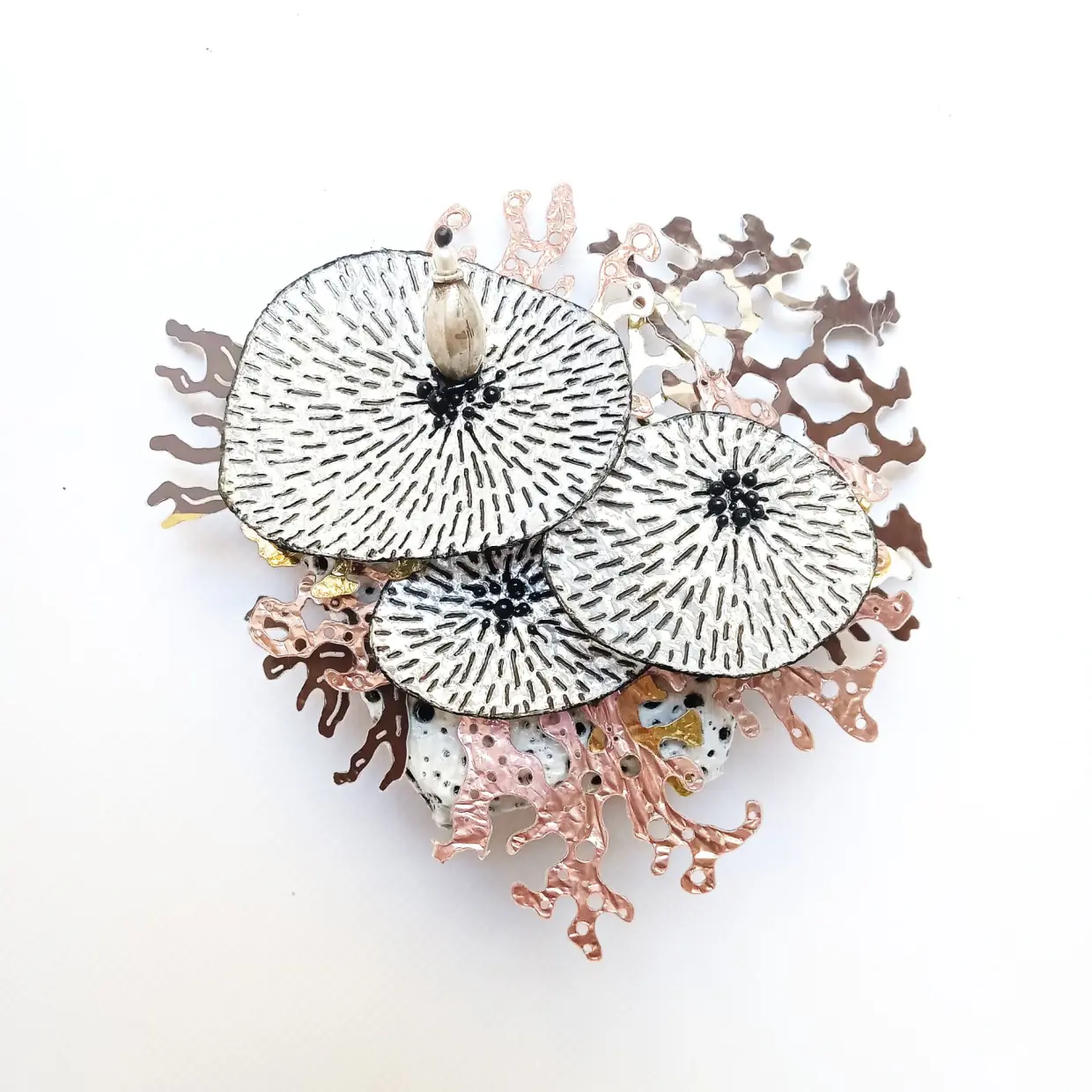
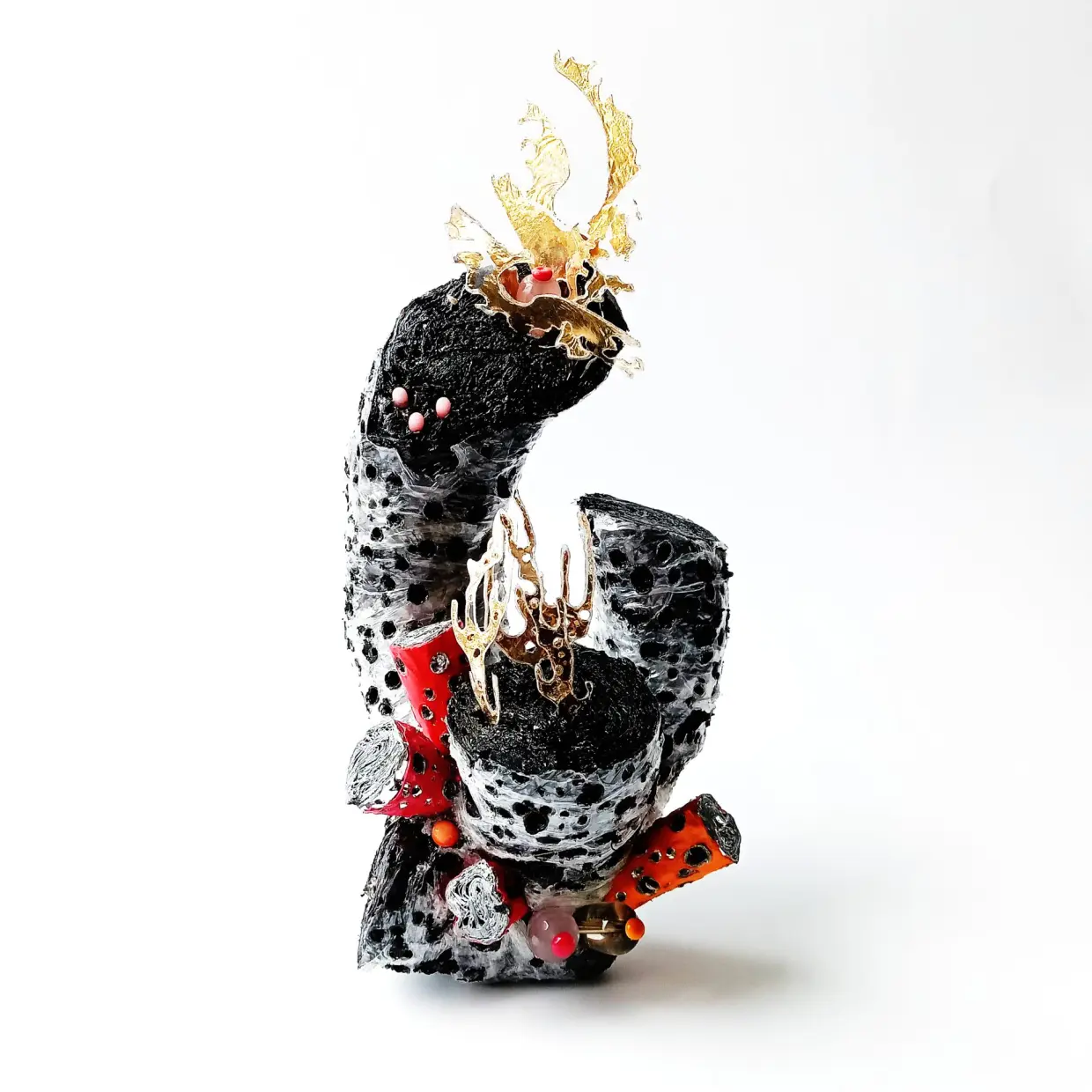
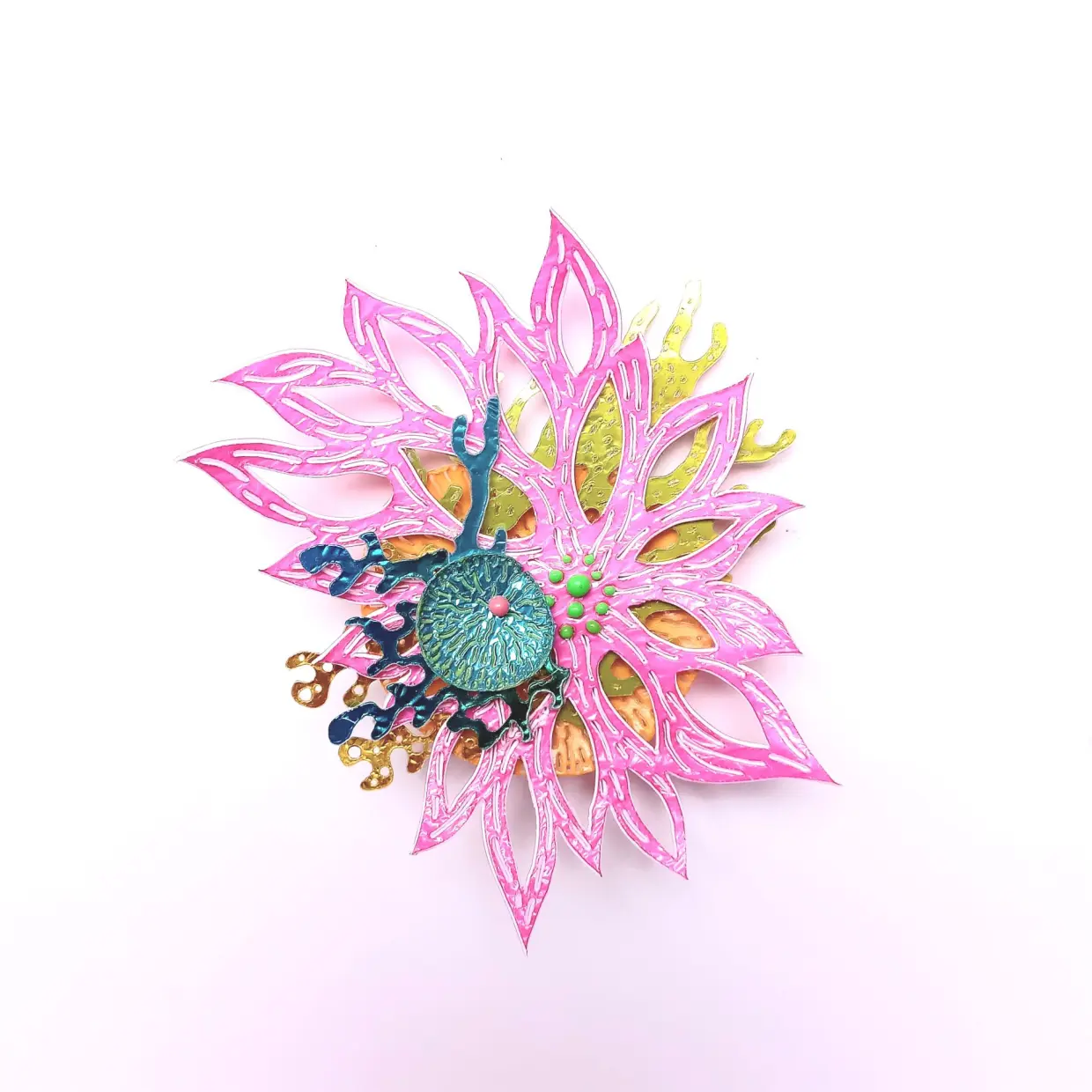
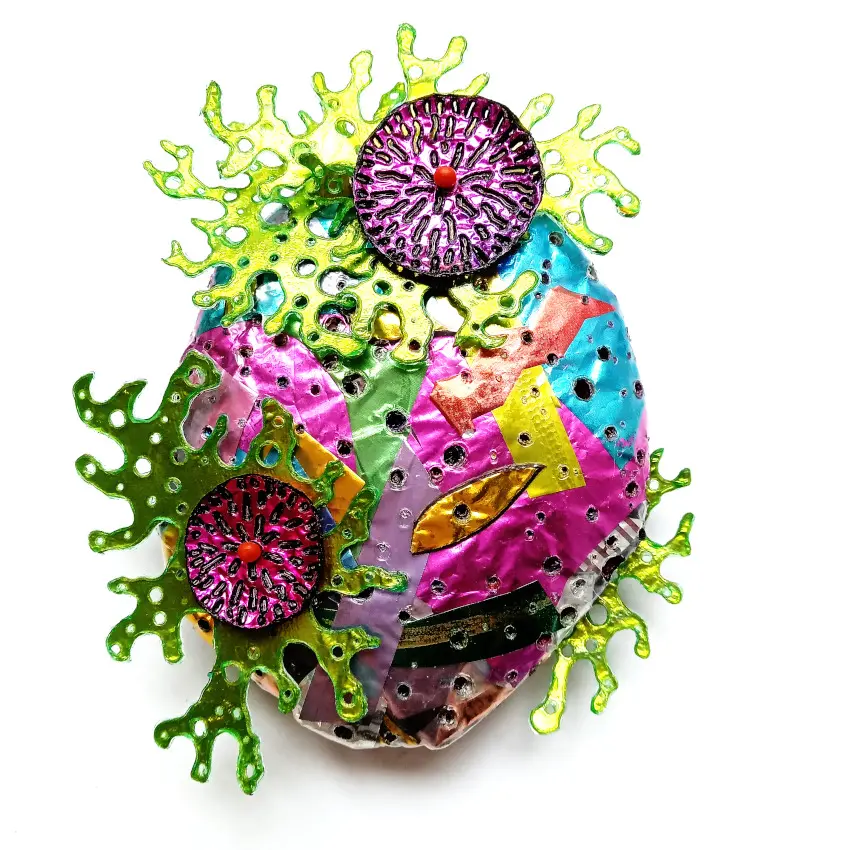
Born in the south of France, Isabelle Azaïs studied at the Toulouse School of Fine Arts before earning a Master’s degree in Nantes.
Alongside her painting practice, she began developing leather jewelry collections in 2005, then focused exclusively on plastic waste in 2017. Without formal training in jewelry making, she has developed a variety of techniques over the years, including lamination, which involves working with packaging films. Her work has been acclaimed by the international contemporary jewelry scene, with invitations to numerous exhibitions in Europe.
In 2024, she represented Belgium at the prestigious MAD about Jewelry exhibition at the Museum of Art and Design in New York, as well as at SHMUCK in Munich, a global event for contemporary jewelry.
Née dans le sud de la France, Isabelle Azaïs a étudié aux beaux-arts de Toulouse avant d’obtenir un Master à Nantes.
Parallèlement à sa pratique de la peinture, elle développe dès 2005 des collections de bijoux en cuir, puis se tourne exclusivement vers les déchets plastiques à partir de 2017. Sans formation initiale en bijouterie, elle a mis au point au fil des années des techniques variées, dont le laminage, qui consiste à travailler des films d’emballages.
Son travail a été salué par la scène internationale du bijou contemporain, avec des invitations à de nombreuses expositions en Europe. En 2024, elle a représenté la Belgique à la prestigieuse exposition MAD about Jewelry, au Musée d’Art et du Design de New York, ainsi qu’à SHMUCK à Munich, rendez-vous mondial du bijou contemporain.
Nacida en el sur de Francia, Isabelle Azaïs estudió en la Escuela de Bellas Artes de Toulouse antes de obtener un máster en Nantes.
Paralelamente a su práctica pictórica, en 2005 comenzó a desarrollar colecciones de joyería en cuero, y a partir de 2017 se centró exclusivamente en los residuos plásticos. Sin formación formal en joyería, ha desarrollado a lo largo de los años diversas técnicas, entre ellas la laminación, que consiste en trabajar con películas de embalaje.
Su trabajo ha sido reconocido en la escena internacional de la joyería contemporánea, recibiendo invitaciones para numerosas exposiciones en toda Europa.
En 2024 representó a Bélgica en la prestigiosa exposición MAD About Jewelry en el Museum of Art and Design de Nueva York, así como en SCHMUCK en Múnich, uno de los eventos más importantes a nivel mundial dedicados a la joyería contemporánea.
Nata nel sud della Francia, Isabelle Azaïs ha studiato presso la Scuola di Belle Arti di Tolosa prima di conseguire un Master a Nantes.
Parallelamente alla sua pratica pittorica, nel 2005 ha iniziato a sviluppare collezioni di gioielli in pelle, per poi concentrarsi esclusivamente sui rifiuti di plastica a partire dal 2017. Pur non avendo una formazione formale nella gioielleria, nel corso degli anni ha sviluppato diverse tecniche, tra cui la laminazione, che consiste nel lavorare con pellicole di imballaggio.
Il suo lavoro è stato riconosciuto dalla scena internazionale del gioiello contemporaneo, ricevendo inviti a numerose mostre in tutta Europa.
Nel 2024 ha rappresentato il Belgio alla prestigiosa mostra MAD About Jewelry presso il Museum of Art and Design di New York, così come a SCHMUCK a Monaco, uno degli eventi più importanti a livello globale per il gioiello contemporaneo.

Isabelle Azaïs is a Brussels-based painter and jeweller who describes herself as an “ennobler” of plastic waste. For our newsletter on creativity, she tells us what inspired her to turn packaging into jewellery.
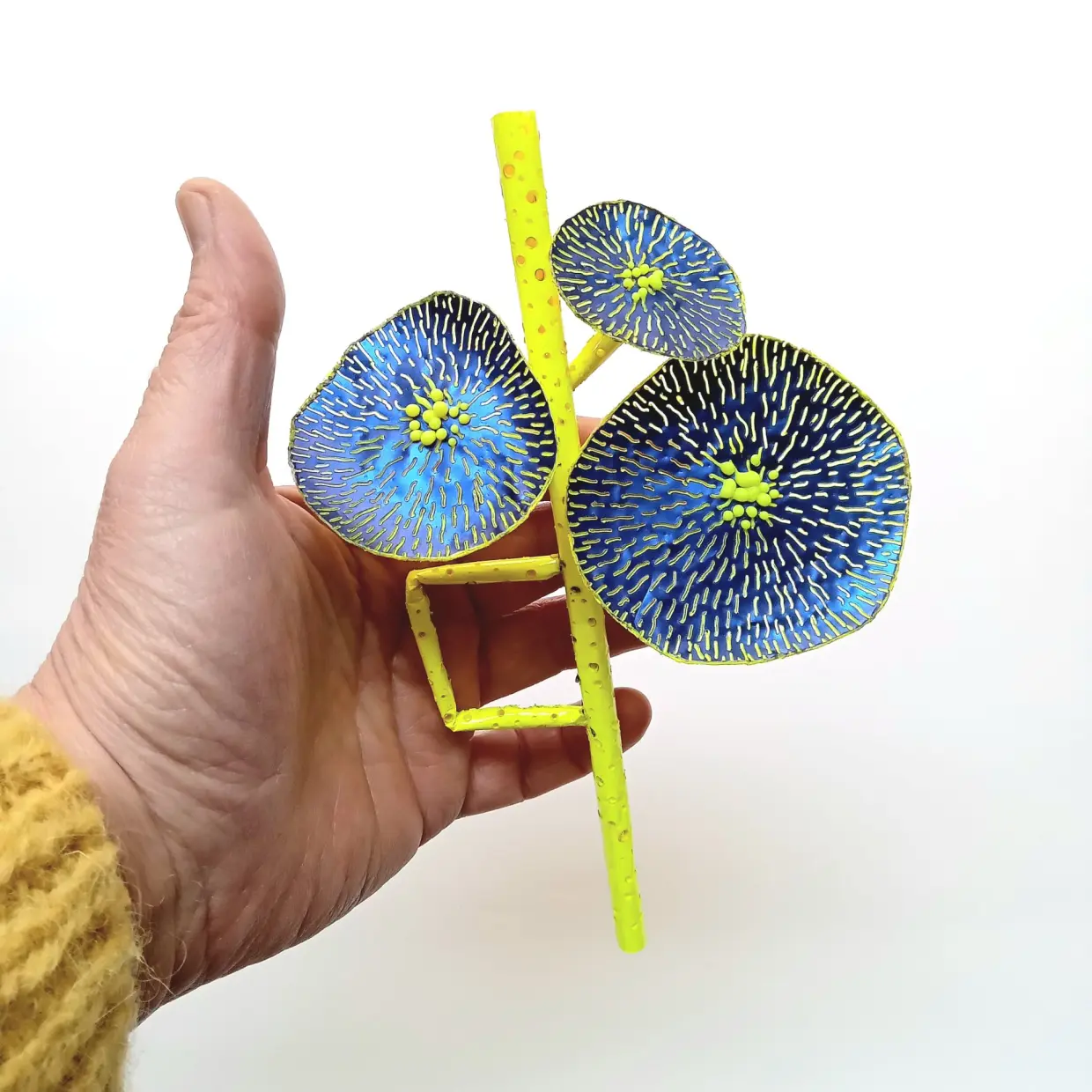
At New York’s Museum of Arts and Design (MAD), several visitors stop at Isabelle Azaïs’s stand. They come closer, look at her jewellery and tell her how beautiful they find it. Only then does she reveal what it’s made of. Isabelle likes it to happen in that order. “It has to charm you first. Recycling is the icing on the cake.”
That was in 2024. Isabelle represented Belgium at MAD About Jewelry in New York and at Schmuck in Munich, two major events in contemporary jewellery. Although still little known to the wider public, contemporary jewellery has been a lively creative field for several decades. It is showcased around the world through jewellery weeks in cities such as London, Barcelona, Porto, Athens, Paris and New York. The next Brussels edition will take place in autumn 2027.
Plastic was everywhere, it was free [...]. It had what she calls a “poisonous beauty”.
Born in the south of France, Isabelle studied fine art in Toulouse before earning a master’s degree in Nantes. She was working as a painter when she and a group of artists moved into a former handbag factory. There were still stocks of leather left inside. “I thought, now what could we do with that?” In 2005, she began making jewellery from it while continuing to paint.
About ten years later, she felt she had explored all she could with leather. She took another look at what she had to hand. Plastic was everywhere, it was free, and she was drawn to its colours. It had what she calls a “poisonous beauty”, like red mushrooms with white spots. That mix of fascination and wariness made her want to work with it.
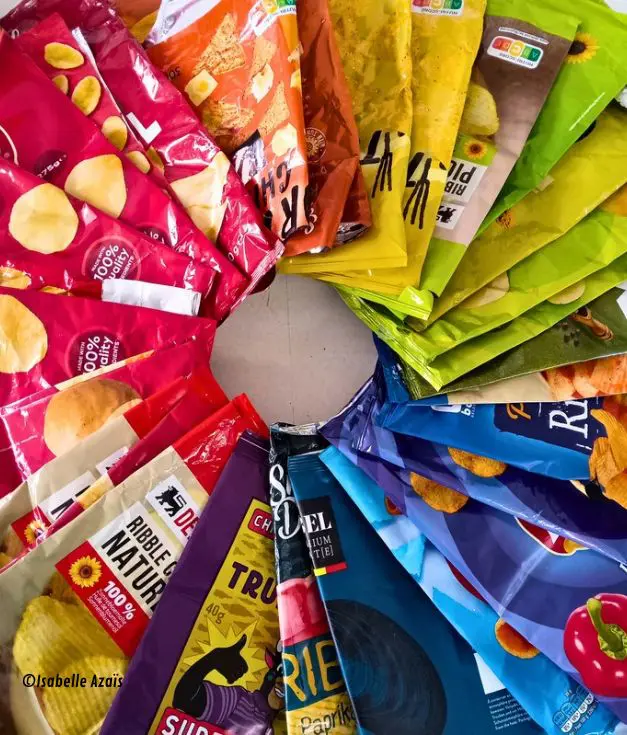
In 2017, she began experimenting with plastic packaging. In the studio, she kept using the tools and methods she had made her own while working with leather. She also tried new techniques, including lamination, which allowed her to turn thin plastic films into a stronger, more rigid material. With no formal training in jewellery making when she started, she learned by experimenting. Sometimes ideas were slow to come. At other times they came in bursts, like bright, colourful fireworks.
When we travel, we notice the shape of a cup, a door handle, the curve of a window. At home, these details are easier to miss. Isabelle tries to bring that same attention to the streets she knows. “You can have adventures close to home, as long as you look closely.”
That’s also how she finds her raw materials. She has long practised urban gleaning, picking up discarded materials on the street, and says the habit has grown stronger over the years. When you keep bringing home things that might come in handy one day, you also have to know when to stop. “Free things can come at a price.”
"Value lies in a ‘no man’s land’ of subjectivity. Like an alchemist, I try to make precious things by transmuting base materials."
Isabelle explains what jewellery means to her. “I can’t use diamonds or gold. I can’t afford them. What I’m after is the chance to experiment with unusual materials. I’m not helping create a treasure of the kind that gets looted in wartime. Value lies in a ‘no man’s land’ of subjectivity. Like an alchemist, I try to make precious things by transmuting base materials.”
When younger makers tell her they don’t have enough money for their work, Isabelle suggests looking at what’s already around them, both for places to work and for raw materials. She also encourages them to look at what others are making, then ask themselves what they could do differently by bringing something of their own to it. That’s what she means by “working with what’s close at hand and ready to use”.
By Regina Garcia Nuñez
 Organisations
 Bone & horn workers +20
 La Hulpe, Belgium

 Aurore de Heusch Crafts Professionals +1 Fashion & accessories +1 Brussels, Belgium
 Graduated professional
 Ecole Jeanne Toussaint Schools and training centres Decoration - Interior design +4 Brussels, Belgium