

-

un Pizzo -

Un Pizzo -
Un Pizzo -
Un Pizzo


Interview of UN PIZZO – FOLK ART DESIGN. A Fondazione Cologni interview.
1. How did UnPizzo come into being?
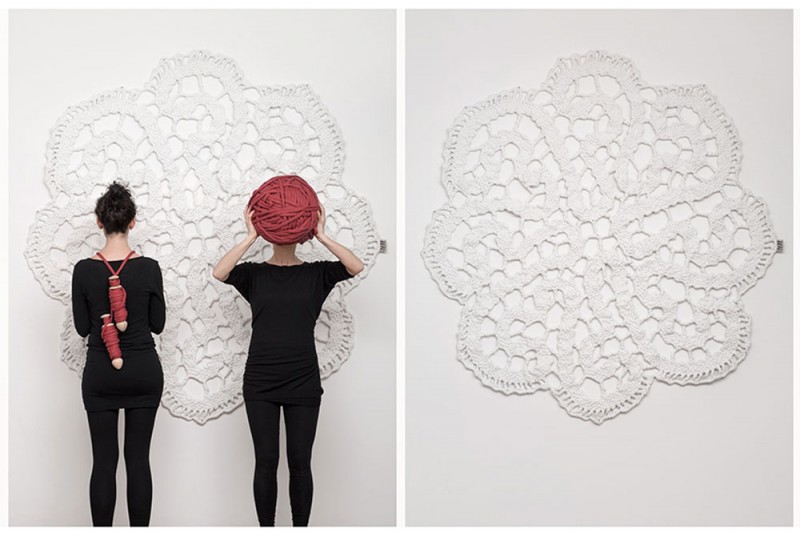
A year ago UnPizzo was founded by two designers from the city of Cantù, who started reflecting on the shape and everyday use of the typical “centrino” (doily), a long-standing traditional archetype. The founders’ aim was to enhance its value and reframe its concept, while still respecting its characteristics. Magnifying it seemed to be the most apt solution, experimenting with a different design approach, as well as establishing a more contemporary aesthetics and functionality. The technique of Cantù lacework, implemented within a modern design project, finds a new role while maintaining the thread of an uninterrupted tradition.
2. What was your curriculum? And in what way did your professional education help you realise this project?
We have both had an academic education, from Liceo artistico (Art Institute) to Accademia di Belle arti (Academy of Arts), in the fields of art and design. Still, we did not actually start this activity as a result of our academic education, but out of disillusionment, after a number of disappointing work experiences entailing too much compromising. We needed to create an activity of our own, we wanted to be independent and channel our passions into a personal project.
3. What kind of products do you realise?
We make laces. We take care of design and we also realise our own products. We sell both by the metre and finished products for interior and exterior furnishing.
4. Who are your clients?
Private buyers and companies, architects, designers.

5. How do you advertise your activity?
Our activity is actually a narrative to be told. We have our own website: www.unpizzo.it, and internet pages on social networks. We will soon start an e-commerce link with direct online purchasing.
6. Have you got any plans for the future?
After an experimentation phase and a number of exhibitions, we will be at Salone del Mobile and Fuorisalone with a new collection of objects. For the future, we are thinking of new sectors, apart from interior design, and we would like to carry forward our research and a further experimentation phase on fabrics, colours and yarns. We would also like to explore different European realities where the art of lacework is present and possibly collect the data of our journey in a documentary film.
7. Do you think other young people like you might be interested in undertaking this activity?
We do not know, but we hope other young people may feel attracted to an activity in which manual skills and design merge into one soul. Should anyone be interested, please feel free to contact us.


