


The Workshop Introduction to Pargetting took place in between 10 to 17 August 2025, and has been organized by Bunesti School and INTBAU Romania with the participation of the British artist pargetter James Collier and the kind support of Traditional Architecture Group, (host of INTBAU UK), and La Table Ronde de l’Architecture (host of INTBAU Belgium).
The aim of the workshop was to train the students of the Bunesti School in this ancient technique, which used to be quite popular locally starting with the end of XVII th Century, but the skills to practice it at present have been lost. In the UK, from where the pargetting teacher was coming, although this is considered a local traditional craft, pargetting is part of the Heritage Crafts’ Red List of Endangered crafts, with only several practitioners left. By organizing this hands-on learning opportunity of this craft at Bunesti School, an established School of Traditional Building techniques, where it was received with great enthusiasm by the students, INTBAU Romania hopes to initiate an active process of craftsmanship skills exchange in between UK and Romania. We were very lucky to have for one week, as the Workshop teacher, the very talented and skilled pargetter, James Collier, listed himself among the few pargetting practitioners left in the UK.

Pargetting refers to the decorative treatment of plastered or rendered building facades that would otherwise appear smooth, lined-out, or roughcast. Historically, the term also encompassed interior ornamentation. Pargetting can range from simple geometric surface designs to elaborate sculptural reliefs depicting figures, flowers, or even sea creatures, though it remains a thin layer applied over masonry or a timber-framed wall with lath. This technique was especially favoured in England during the 16th and 17th centuries. The word is believed to originate from the French ‘parjeter’ or ‘pargeter,’ meaning “to throw about.” It denotes a traditional method of creating raised decorative plasterwork or render, most commonly seen on the exteriors of timber-framed buildings.
Well known before and during the Roman Empire as a more affordable alternative to marble low-relief decorations, pargetting originally served a primarily symbolic and decorative function, often depicting complex biblical stories and concepts within its panels. Later, it took on a representational role, showcasing wealth, culture, and classical knowledge, most notably in the ‘Nonsuch’ Palace commissioned by Henry VIII, where renowned Italian masters used it to reflect his refined architectural taste.
Over time, pargetting also acquired practical functions, acting as an excellent fire retardant and protecting timber-framed buildings from the elements, while still serving as a decorative and status symbol. This is evident in 17th-century structures such as Sparrowe’s House in Ipswich, as well as numerous examples across Suffolk, Essex, and Hertfordshire in the UK.
Under the name ‘stuc’, this decorative technique was introduced to Wallachia (historic name of the Romanian County) at the end of the 17th century, under Ottoman influence. It became widely used to embellish both the interiors and exteriors of Brâncovenesc-style mansions, palaces and some churches.
Although many of these residential examples have been lost, stuc decorations can still be seen on the exterior of the ‘Fundenii Doamnei Church’ (1699), as well as on the facades of a few preserved manors, such as ‘Potlogi Palace’ (1698), the ‘Casa cu Blazoane’ (1760), ‘Casa Hagi Prodan’ (1785), or on the elevations of ‘Hanul lui Manuc’ (1808).


In Transylvania, this decorative technique appears in a simpler form, often on the pediments of Saxon houses, typically in medallions marking the year of construction and adorned with floral motifs.
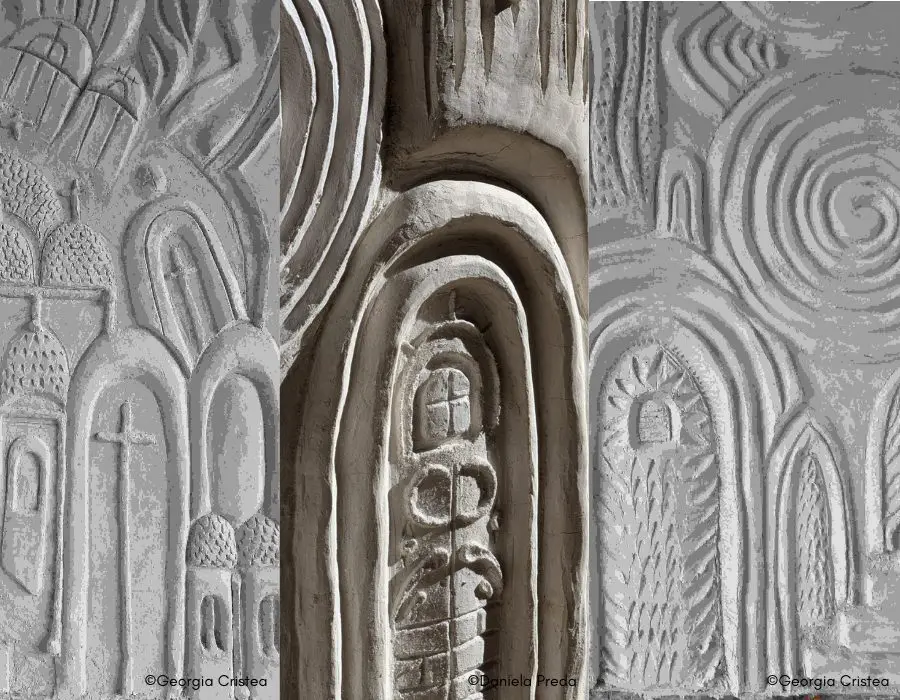
Taking inspiration from the elevations of the Fundenii Doamnei Church, the Introduction to Pargetting workshop revisited the symbolic and aesthetic qualities of this ancient craft, while exploring its potential application in new constructions built with traditional materials, adding a local character and a high level of detail to modern façades.
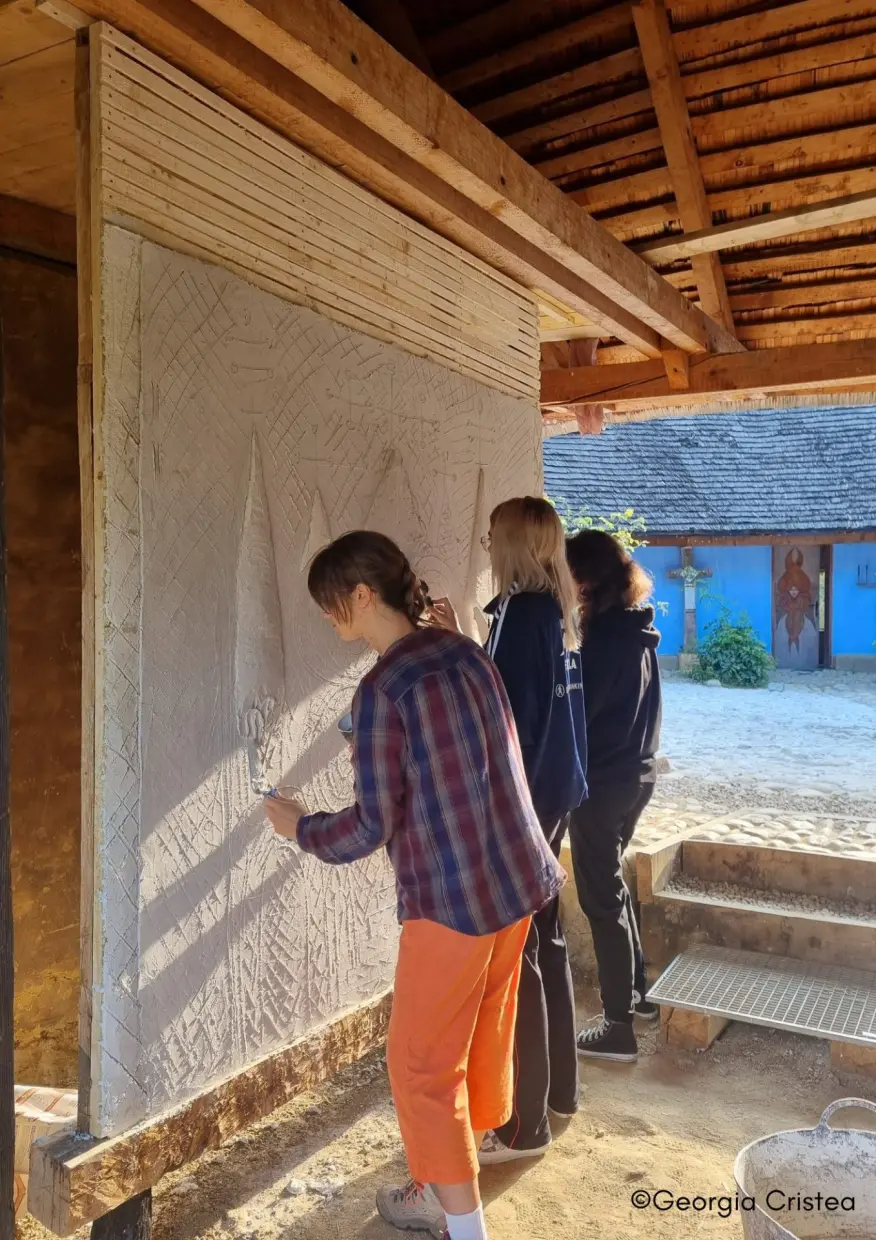
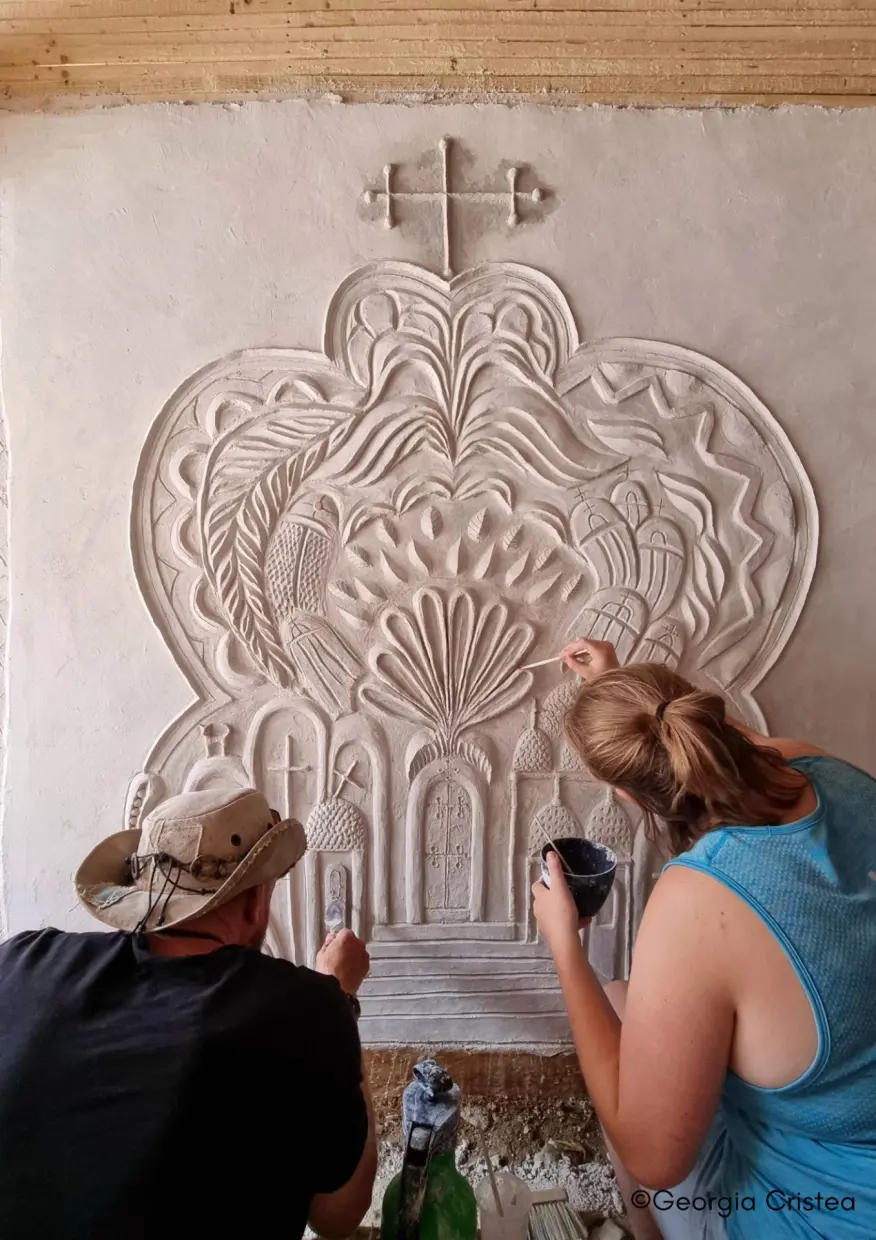
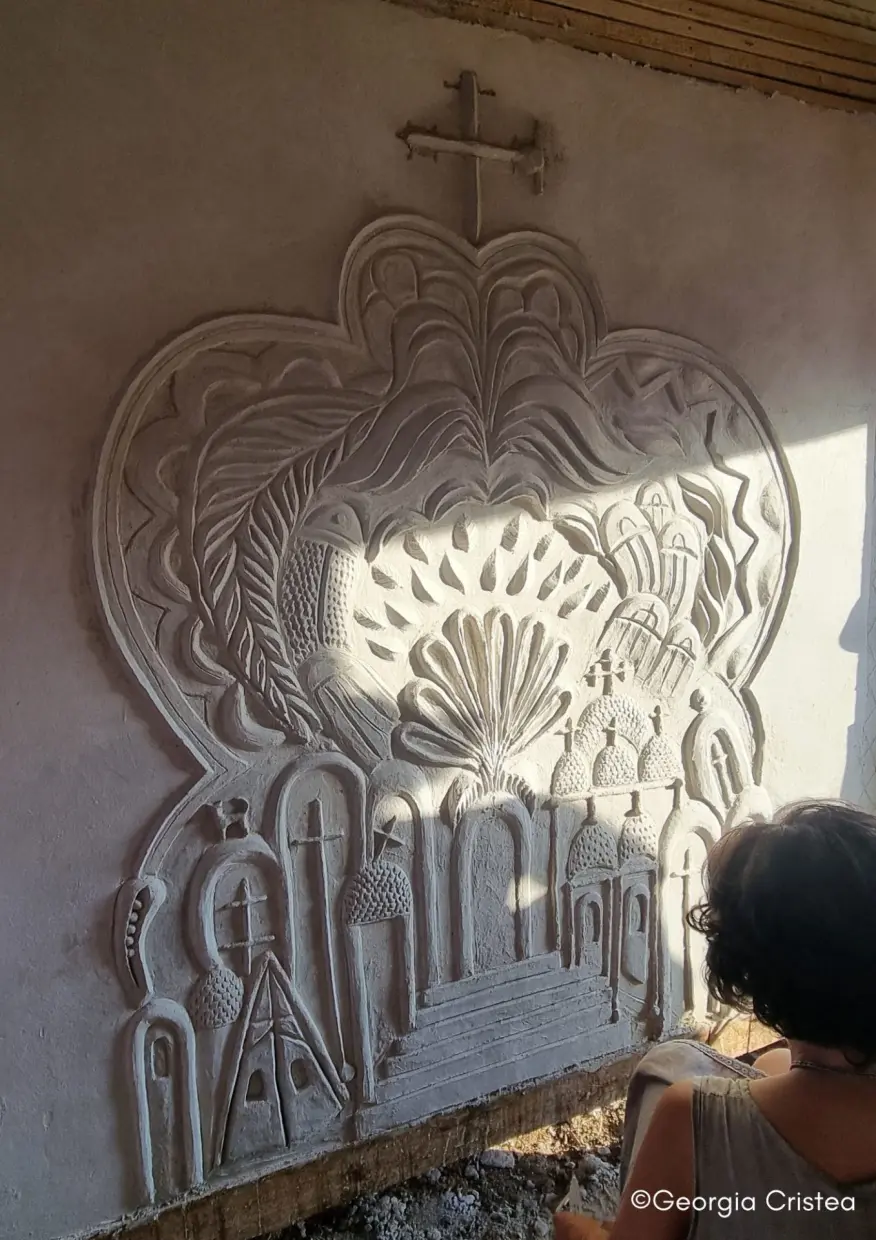
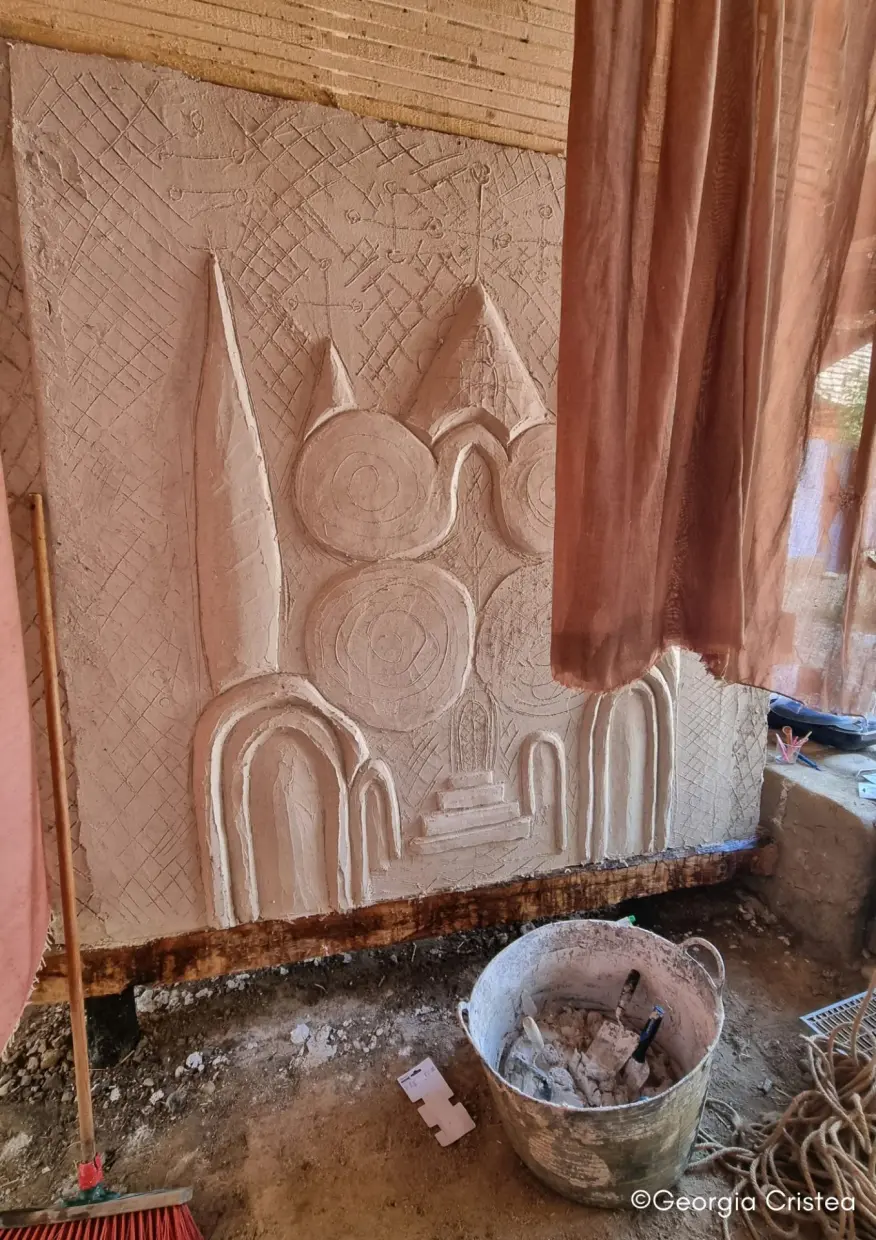
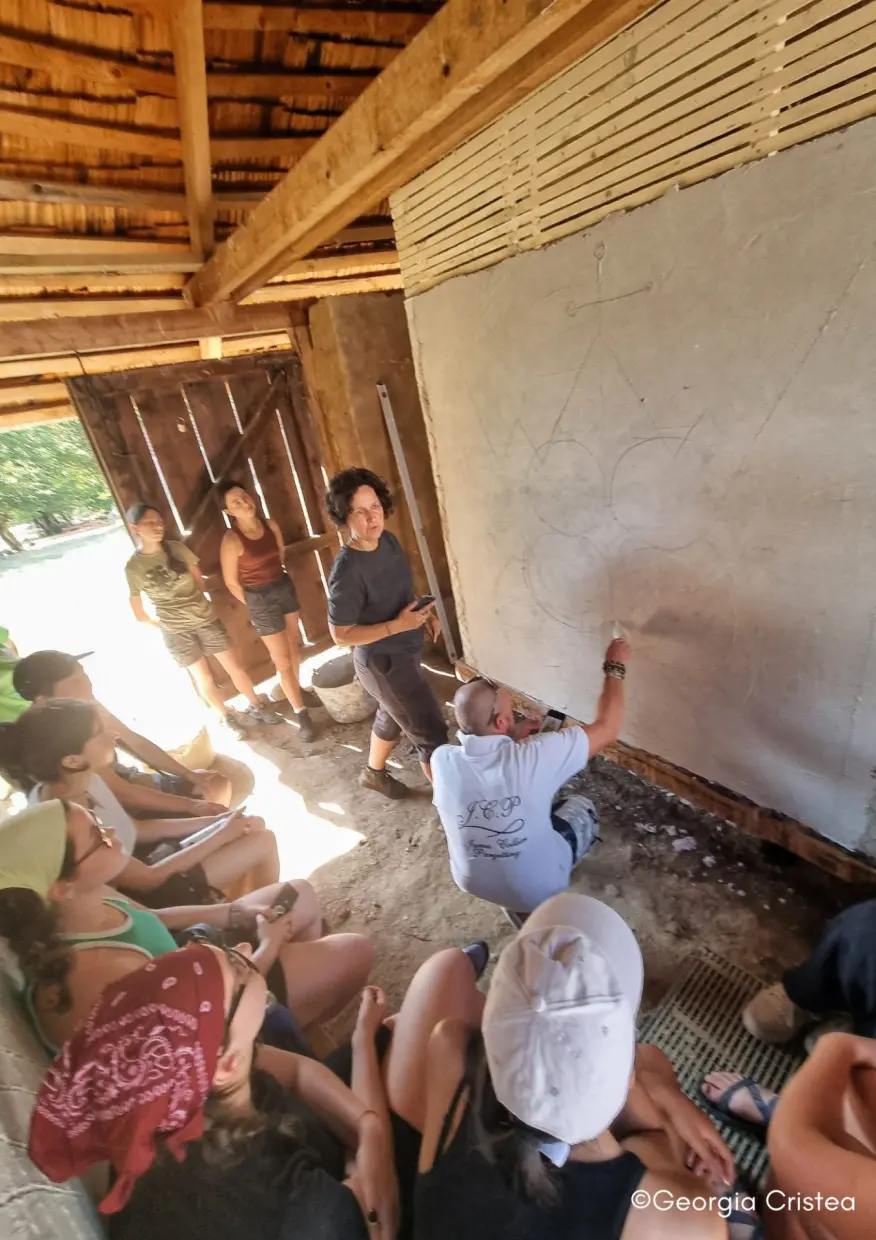
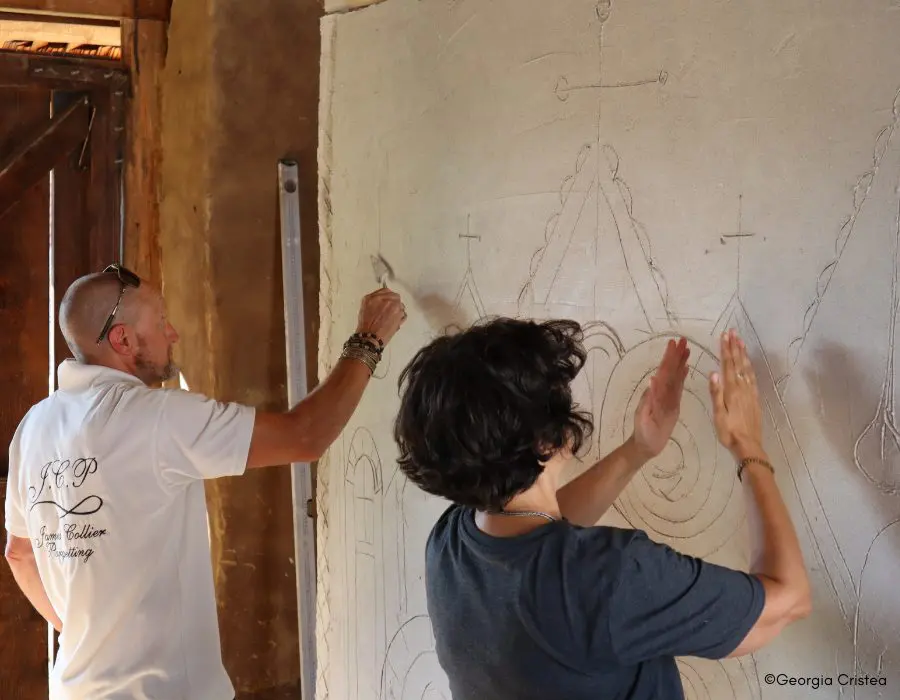
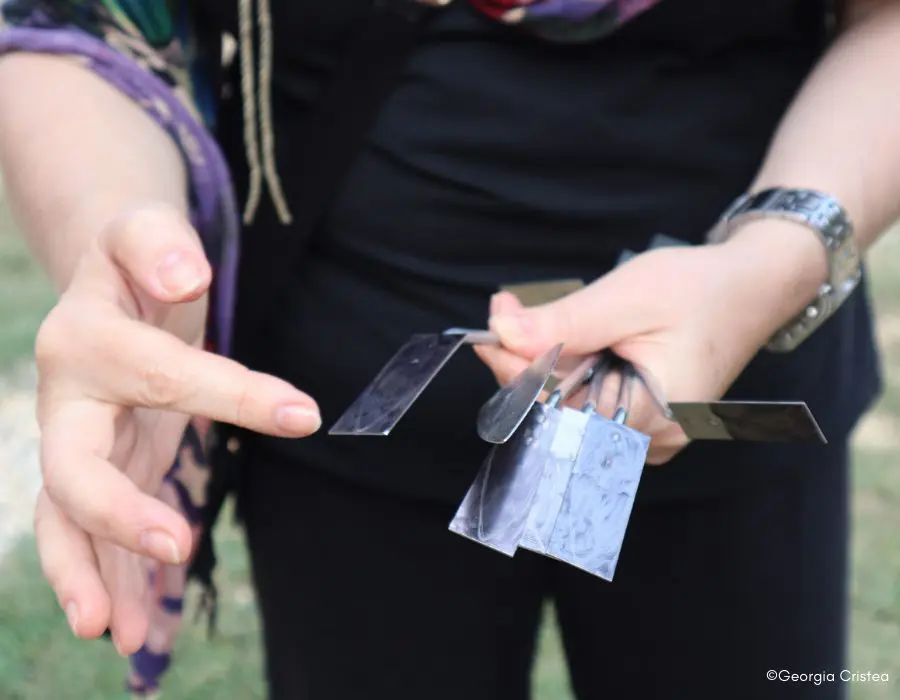
During the workshop the students learnt how to build a laths wall, mix and apply the plaster layers, and then they started to build up a decoration in the Pargetting technique for the two monumental panels at the entrance of the Students House in Bunesti School.
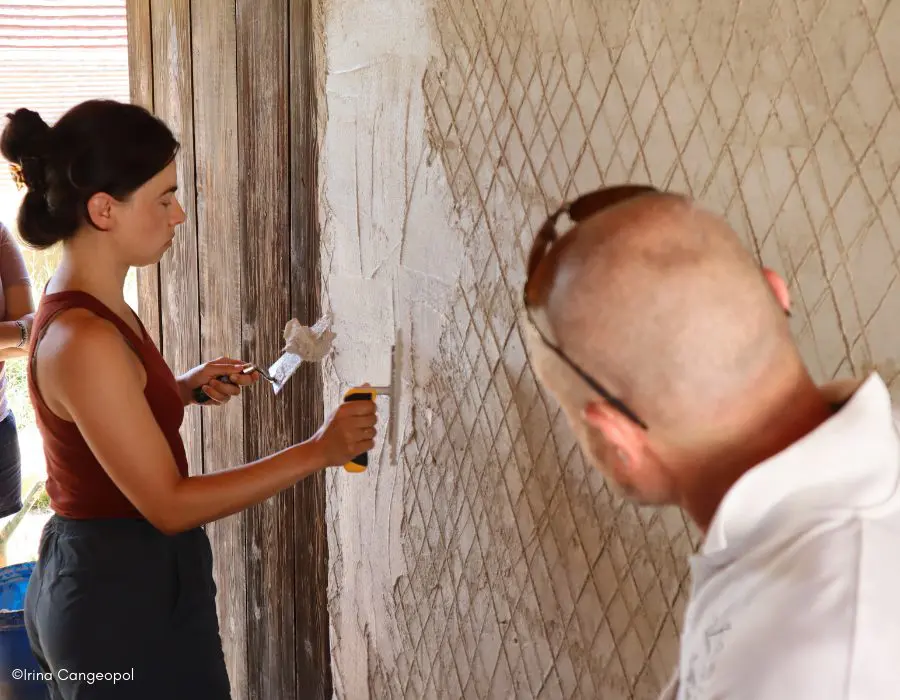
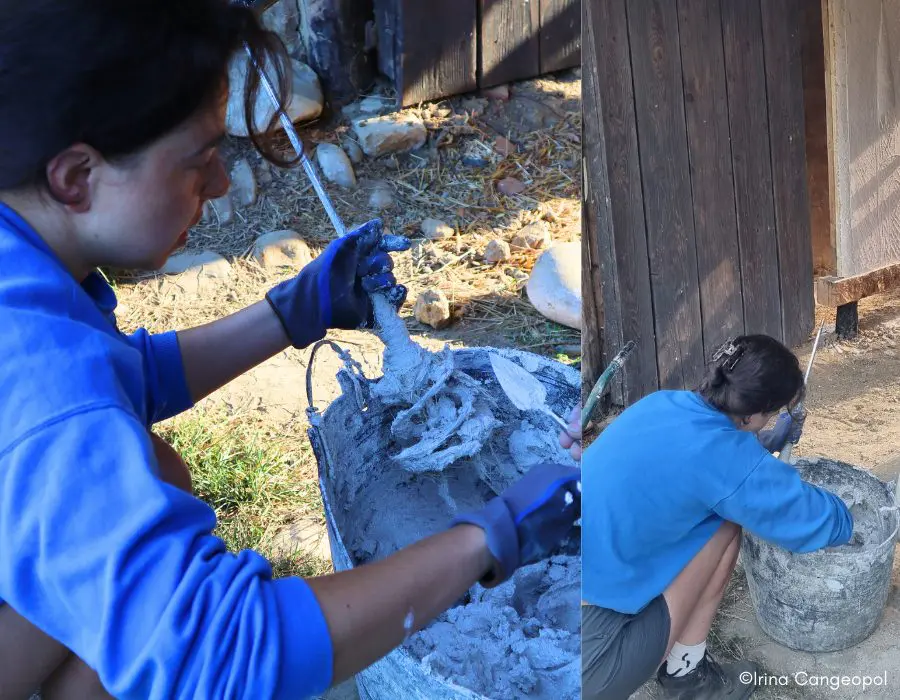
The material used is ‘parge,’ a mix of sand and lime combined with a binder such as hair, traditionally applied for lining flues and sealing beneath roof tiles to reduce drafts. Historical records mention various additional ingredients, including stable urine, soot, tallow, cheese, dung, blood, and salt, all intended to create a thick, slow-curing mixture. If it hardened too quickly, intricate patterns would be difficult to form; if it set too slowly, it risked damage from frost. The binding agent used in the workshop was goat hair, supplied by the local shepherds, for obtaining a fine and flexible, extremely sticky mix.
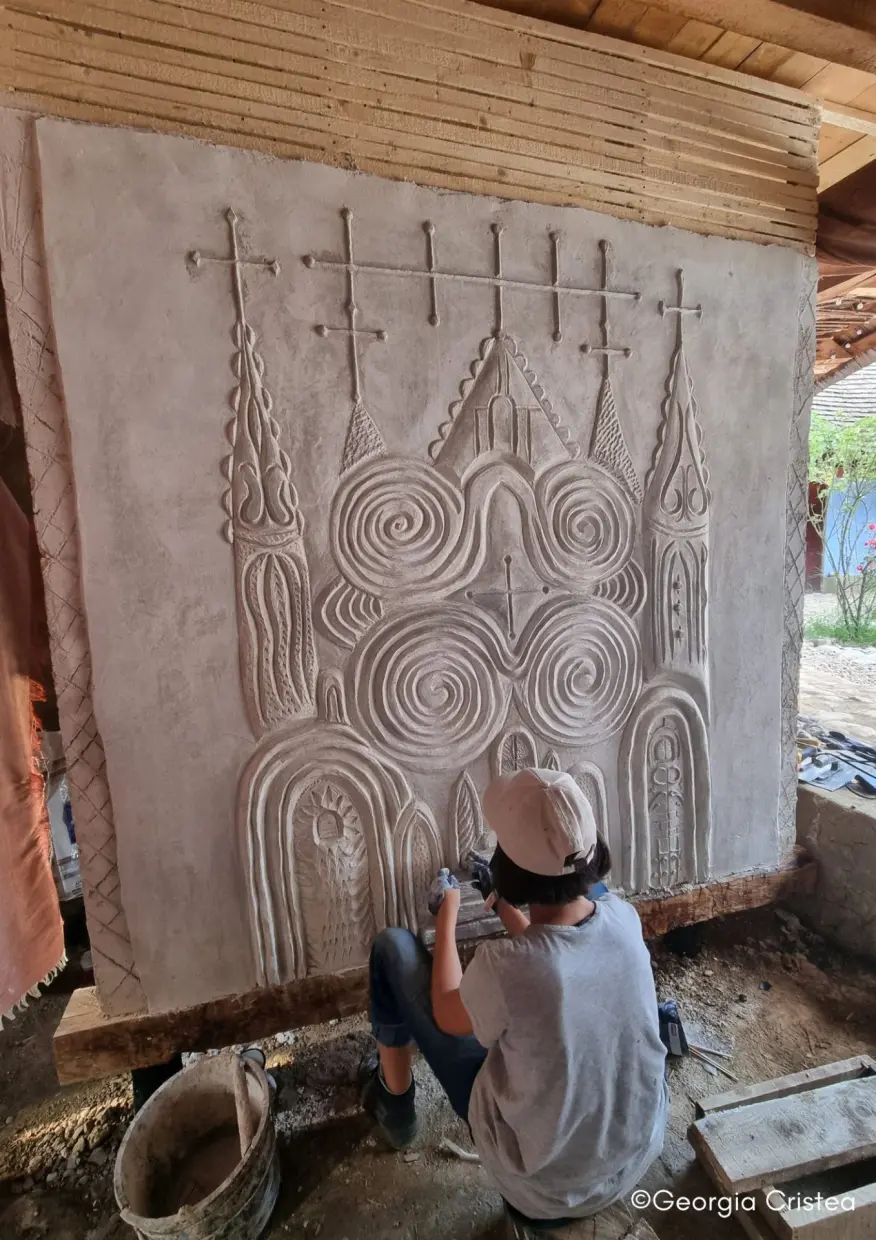
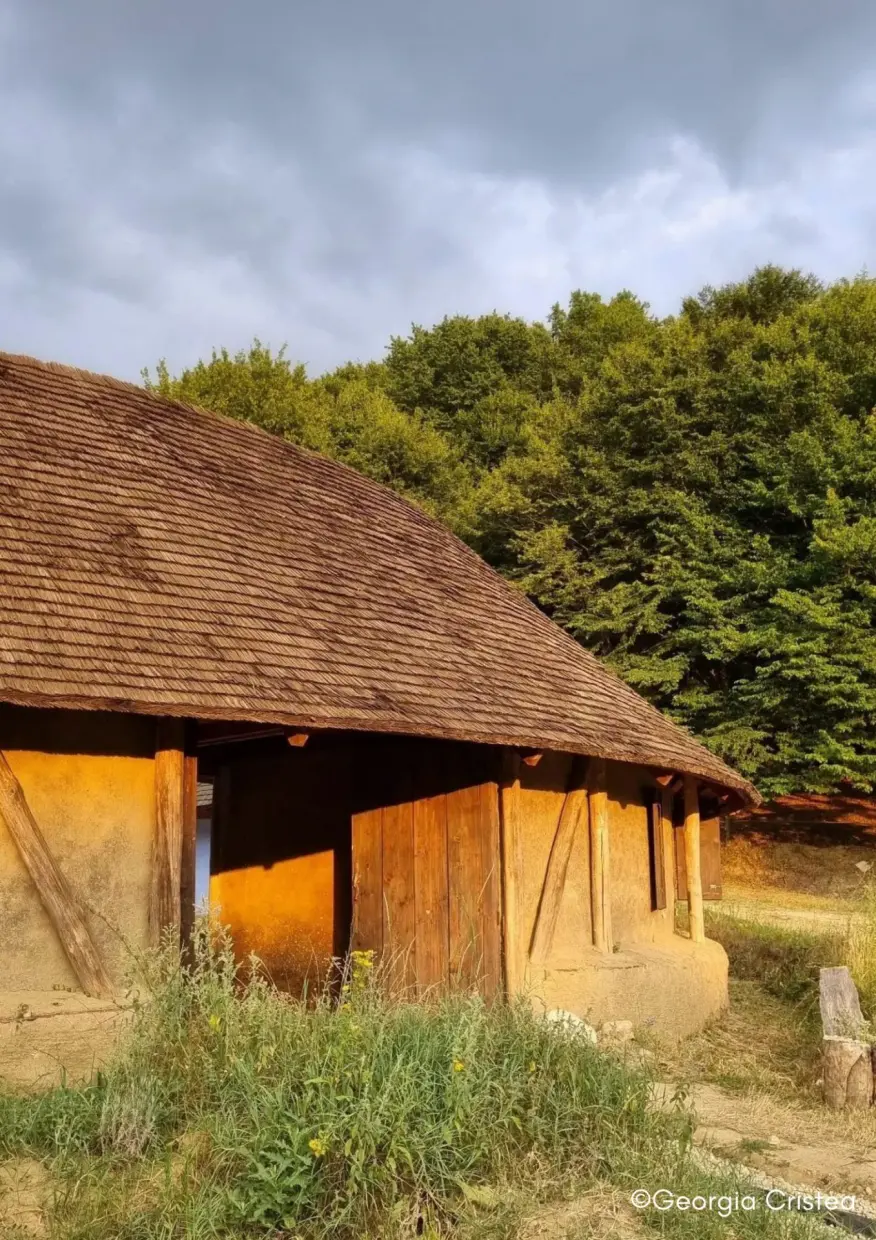
Following the creative vision of Ana Maria Goilav and Petre Guran, founders of the school, the design of the two pargeted panels was inspired by the drawings of the venerable Monk Gherontie. The wall bathed in dawn light was intended to symbolize the world as we know it, while the wall illuminated by the golden sunset represented the aspirational Kingdom of God.
The Monk’s naïve drawings translated beautifully into three-dimensional form, though the process was challenging, as it became a collaborative effort among students from diverse cultural backgrounds and denominations.
Pargetting, with its raw and almost primitive artistic expression, was traditionally employed, particularly in its historic origins, such as in the Roman Empire and the deeply spiritual Byzantine world, to convey powerful symbolic messages while also creating visually striking decorative surfaces.

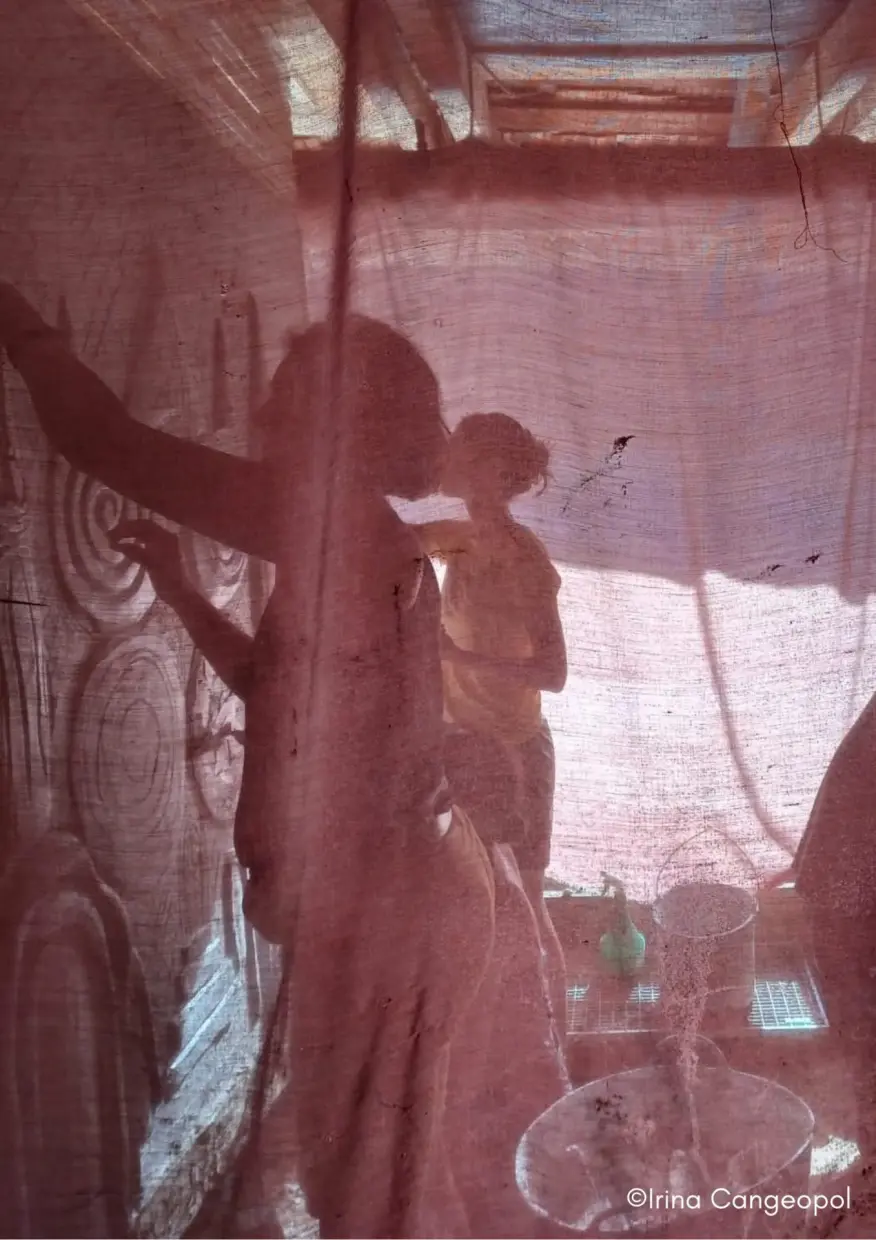
A schematic design was first etched into the freshly applied wet plaster on the panels, then partially filled with rough plaster forms that would later be carved and detailed after the material had firmed up. However, the intense daytime heat caused the plaster to dry too quickly and crack, so a tent made of continuously dampened sheets was erected to create a microclimate, keeping the panels moist and preventing rapid drying.

One of the participants at the workshop, the talented Eva Sol, a MSc in Conservation and Restoration of Historic Interiors Student, Amsterdam, sent a very inspiring testimonial:
“Last August, I participated in the pargetting workshop at the School of Bunești, organised in collaboration with INTBAU, after discovering it while searching online for practical courses in plaster and lime to complement my theory-focused Master’s in Conservation and Restoration of Historic Interiors. I wanted to deepen my understanding of plaster in both a practical and historical sense, and meet others with a shared interest in traditional craftsmanship and architecture.
The workshop offered a complete experience. We learned every stage of the process: preparing the surface, sieving sand, cleaning goat hair for the lime mixture, testing the consistency, and finally applying and shaping the plaster onto the walls. Alongside this hands-on training, we explored pargetting traditions in Romania and other parts of Europe, which placed the practical work in a wider (art)historical context. The School of Bunești, set in a beautiful landscape and dedicated to traditional building practices, created an inspiring context for this kind of learning.
Creating a collaborative artwork with the group was a highlight, as it brought together technical learning and teamwork in a meaningful way. The workshop gave me confidence in working with lime plaster and a clearer sense of its material properties. Beyond the skills gained, even more enriching was the exchange of ideas with participants from different countries and the chance to experience the warm community around the School of Bunești. Joining the Pargetting workshop was a wonderful experience, providing me with valuable new connections, skills and knowledge and the opportunity to contribute to the exciting ongoing work at the School of Bunești!”
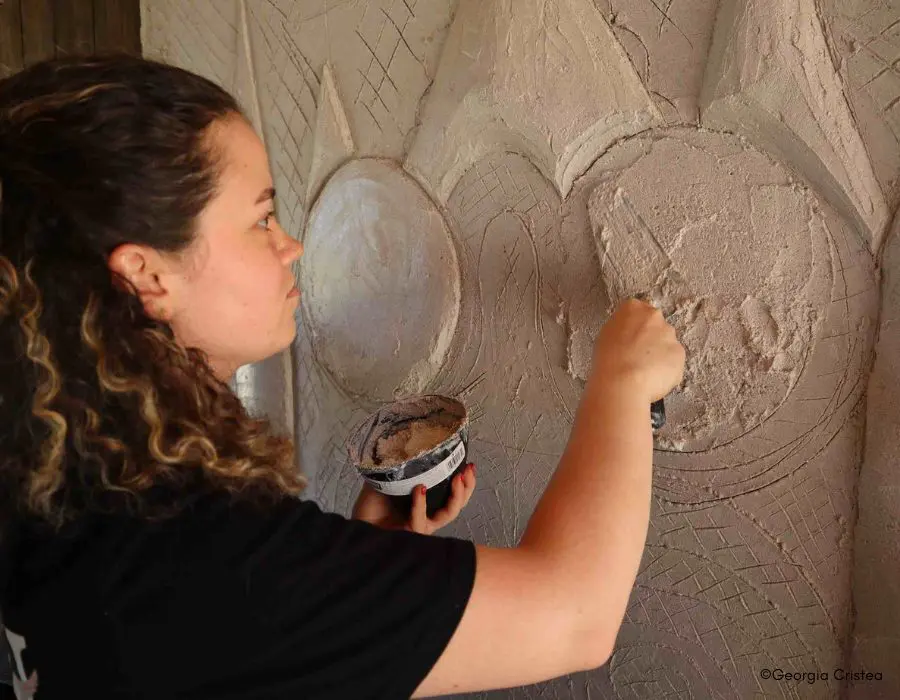
The workshop brought together a diverse group of international students from the Netherlands, USA, Croatia, and Romania, with participants ranging in age from 10 to 58 years old. Everyone found pargetting both relaxing and deeply engaging, and some even plan to continue practicing the craft, whether by decorating their own homes or pursuing specialisation in this decorative technique.
At the close of the workshop, the founders of the School of Bunești, Ana-Maria Goilav and Petre Guran, the pargetting teacher James Collier, and Georgia Cristea, INTBAU Romania’s Education and Projects Manager, expressed great satisfaction with the outcome. Two monumental, symbol-rich pargeted panels were created, transforming the entrance of the Students’ House. Along the way, students revived a nearly lost craft and formed lifelong friendships.
There is significant demand for skilled pargeting, particularly for restoring the traditional decorations that once adorned the gables of houses in Transylvanian Saxon villages and beyond. Mastering this craft would not only enhance the quality of conservation work in the region but also highlight for architects working with traditional construction methods the versatility and expressiveness of pargeting, a craft once widespread across Europe and regions influenced by European architecture.
Through workshops like these, INTBAU Romania seeks to revive Romania’s lost traditional crafts, by bringing them into Present, for a sustainable, meaningful and beautiful crafted Future.
Georgia Cristea is an Conservation Architect, RIBA CA and INTBAU Romania’s Education and Projects Manager


