

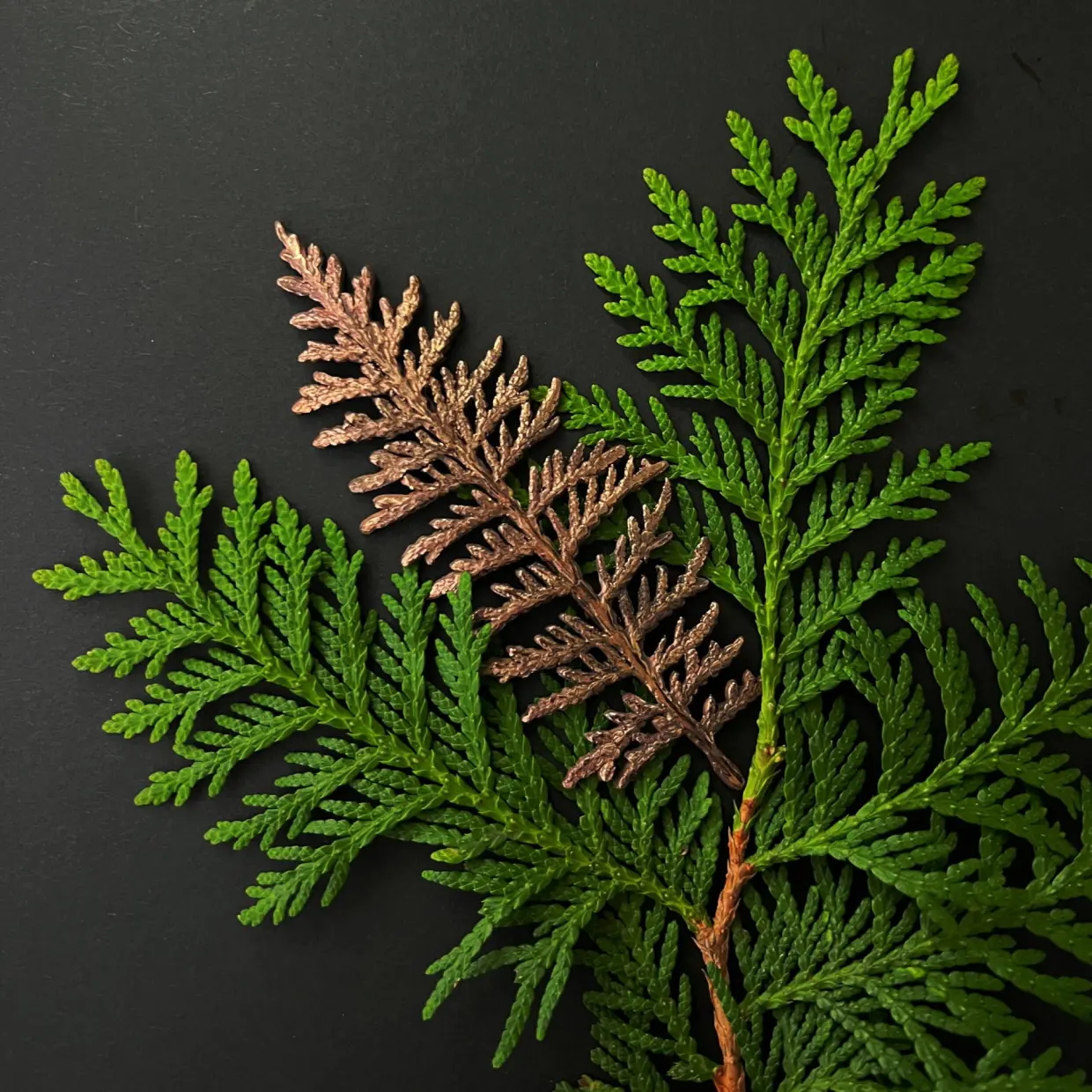
At Atelier Herbarium, every leaf tells a story
For Jane Bosshard Quillerat, founder of Atelier Herbarium, creating a piece of jewelry is never just about shaping metal. It means observing a leaf for hours on end, marveling at a plant structure invisible at first glance, learning endlessly, and giving new life to what most people no longer notice. Between nature, heritage and craftsmanship, she opens the doors to a world where every gesture tells a story.
“I believe I’ve always created.” Some callings aren’t born of a decision, but of an inevitability. For Jane, creation has always been at the center of her life.

When did you realize that craftsmanship would become part of your life?
As a child, I could spend hours drawing while other children went off to play. It wasn’t a hobby, it was a need.
I then studied applied arts before being accepted into the Beaux-Arts. I moved toward the restoration of paintings and mural frescoes — a field that wasn’t part of my original plan, but that taught me an enormous amount. At the same time, I was already working in sculpture, modeling and painting workshops, while also running creative workshops for children and people with disabilities.
Jewelry-making came almost by chance. I simply wanted to create the pieces I couldn’t afford to buy. I started with reclaimed materials, fascinated by old objects and the craftsmanship they revealed. A beaded piece of lace, an old textile… I couldn’t accept that such work would simply disappear. I wanted to understand how it had been made.

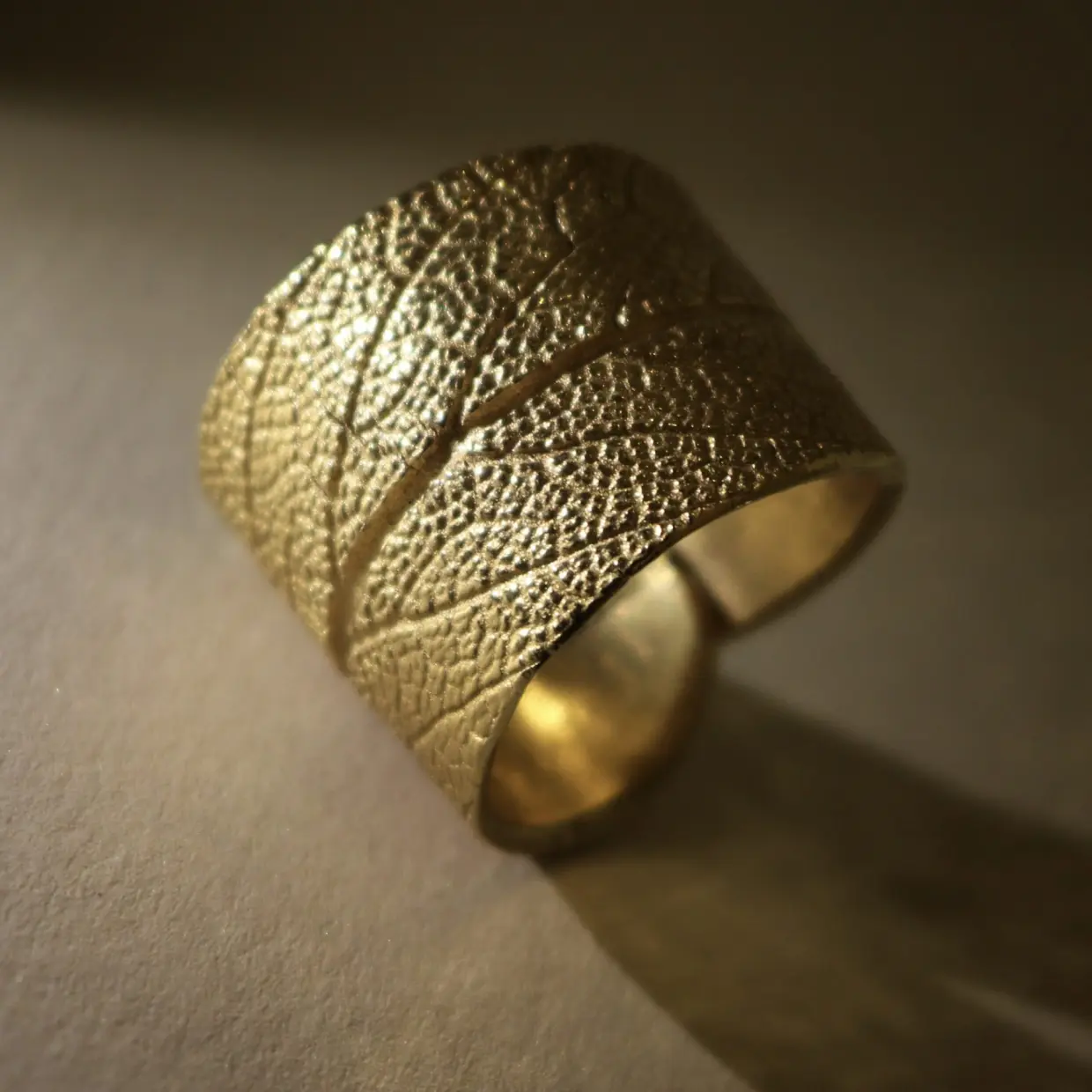
Observing before creating
For Jane, nature isn’t just a source of inspiration. It’s a permanent school of observation. Every walk becomes an invitation to slow down and look at things differently.
Why does nature hold such an important place in your work?
Nature is my second passion. The more I observe it, the more extraordinary things I discover. I can travel to distant worlds without ever leaving my own garden.
A leaf, for example, seems ordinary. And yet, without it, there would be no atmosphere, no life. We often walk right past that richness without ever seeing it.
That’s also my definition of luxury. To me, luxury isn’t flashiness, nor the accumulation of precious materials. True luxury is an object made entirely by hand, one that carries a story and a way of seeing.


Hours of research behind every piece
Before ever casting metal, Jane spends a great deal of time observing, reading, experimenting. The technical gesture only comes after the curiosity.
How does a creation come to life in your workshop?
Everything starts with a question that nature asks me. I look at a plant, a structure, a shape. Then I do research, I read, I try to understand how it works.
Then comes the experimentation phase. I never try to reproduce exactly what I see. Instead, I try to translate an architecture, a sensation — sometimes something invisible to the naked eye.
Lost-wax casting has become my technique of choice. For leaves, I first make a silicone mold, then pour the wax myself, which I rework entirely by hand before casting. What I love is following the whole journey, from the idea to the finishing touches.


Preserving the gestures
One word keeps coming up throughout the conversation: heritage. For Jane, artisanal know-how isn’t simply about tradition. It represents a form of freedom.
Why is it so important to preserve craftsmanship today?
These skills are what allowed us to get where we are. They’re part of our heritage, but also of our independence.
Today, I could outsource certain stages of production. It would be easier. And yet I don’t, because it would strip away part of the soul of my creations.
What worries me is the growing gap between objects and the knowledge of how they’re made. Many people recognize a hammer or a saw, but have no idea what it actually takes to transform raw material.
Every skill that disappears is an immense loss. We’re becoming ever more dependent on industrial production, and little by little we’re forgetting our own capacity to create.
A lifetime of learning
After more than twenty-five years in her workshop, Jane still considers herself a student.
You seem to be constantly learning. Is that essential in your craft?
Absolutely. I never attended a jewelry-making school. I learned by reading extensively, by experimenting, and above all thanks to the generosity of other craftspeople who were willing to share their knowledge.
Even today, I keep learning. Nature is infinite, and so are the techniques. I don’t think we’re ever truly done discovering.
“The way changes, but the gesture stays the same,” Jane tells us.
Before leaving her workshop, Jane naturally turns to what feels essential to her: passing it on.
What message would you like to pass on to the younger generations discovering craftsmanship today?
There’s a time for learning, and a time for passing things on. Gestures evolve, tools change, but the essence stays the same.
I don’t believe you can practice a craft without passion. Behind every handmade object, there’s time, patience, mistakes, discoveries, and a great deal of humanity.
If we stop passing these gestures on, we will lose far more than techniques. We will lose a way of understanding the world.


