100% wool? A memory or a reality?
In this newsletter, we explore the wonderful world of wool, a fibre used since antiquity, with extraordinary properties, produced in large quantities, and natural. A fibre that, it must be said, has been somewhat forgotten. And, we are all somewhat responsible. Yet there are still artisans who have chosen 100% wool!
Wool: the past and the future of a sustainable fibre
Wool has shaped Europe’s history for millennia, yet today, despite its cultural and environmental value, it has become one of the most undervalued fibres. With rising disposal costs, weak infrastructure, and competition from imports, the supply chain is at risk.
The Journey of Wool
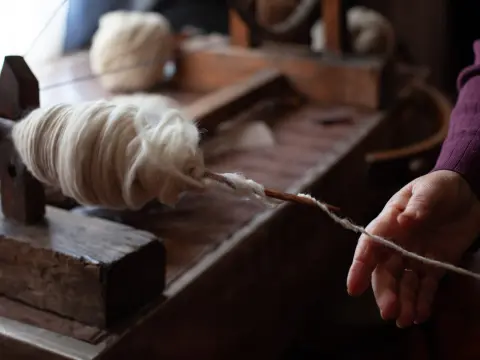
When you put on your favourite wooly jumper, do you know how much goes on before it reaches your wardrobe? This article traces how wool goes from sheep to shelf, with insights from the skilled and knowledgeable craftspeople who play a part in this journey.
Take a glimpse at a small selection of some of our members: wonderful associations, schools and individual craftspeople involved in the world of wool.
Timmi Kromann
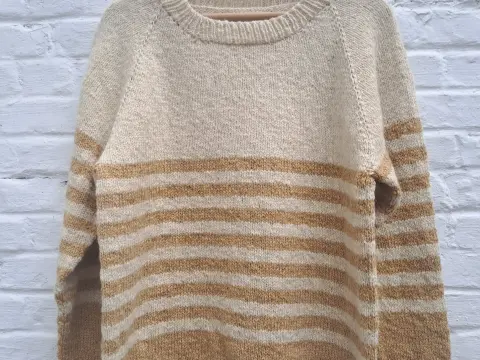
On the beautiful island of Bornholm lives Timmi Kromann of Kokolores. A maker and textile designer, she is dedicated to crafting high-quality pieces meant to become favourites for generations to come
Made With Love Romania
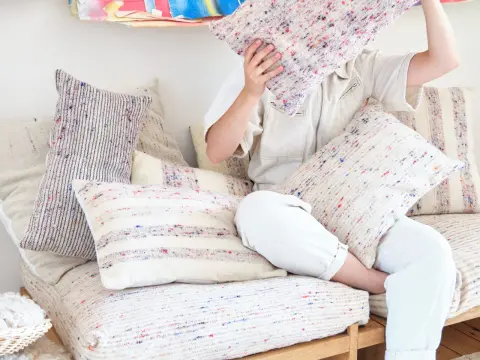
A project born from childhood memories and the desire to preserve a tradition: MadeWithLove takes us through ancient rugs, family stories, and the communities that still keep the art of weaving alive today.
Harris Tweed Authority
An innovative business model, based on tradition and heritage safeguard. According to the 1993 Harris Tweed Act, Harris Tweed must be woven exclusively in the homes of the locals in the Outer Hebrides. So, how does such a small island, the sole producers of this tweed ensure the quality and authenticity of this fabric endure?
Lorna McCormack
A passionate advocate and teacher, Lorna McCormack brings wool into school to teach children both the ecological and cultural value of wool in our daily lives.
Marion Foster
Kilt making is an endangered craft but at The College of Master Kilt Tailors, Marion Foster keeps the art of traditonal bespoke kilt making alive, transmitting old knoweldge and techniques to future kilt tailors.
Wool in CRAEFT community
The South Creuse region in France stands as a remarkable exception in Europe’s declining raw wool market. It successfully maintains its entire wool production chain, making it vital to the UNESCO-recognised Aubusson tapestry manufactories and workshops. This local ecosystem, further strengthened by the Lainamac association, supplies the essential raw material that Aubusson weavers need. By using its cultural heritage as a stabilising force, the region offers a powerful case study.Can this “South Creuse Model” linking local raw material production directly to a prestigious cultural and manufacturing hub be successfully replicated in other European textile regions?
Join the discussion on the Craeft COMMUNITY and share your thoughts!
News in MIE
Mad’in Europe and its partners champion micro businesses by advocating for crafts, safeguarding authenticity, and promoting skills transmission and innovative business models. We collaborate widely to amplify the voices of craftspeople. Through the CRAFTOUR initiative, we partner with 75 European organisations to engage with European institutions at major upcoming events.
More details will be shared soon. Stay tuned !
As this newsletter guides you through the many stages of wool transformation, it also shines a light on the artisans who keep these skills alive. Their workshops, demonstrations and peer-to-peer exchanges are powerful examples of non-formal education, where learning happens through doing, observing and experiencing rather than in structured classrooms. This mode of transmission is at the core of the BRICKS project, which supports craftspeople who continue to teach and share the full spectrum of wool-making know-how with new generations.