Music is more than what we hear, it’s what we see, touch, and feel.
Behind every melody lies a world of craftspeople whose silent mastery makes sound possible: luthiers shaping instruments from wood, noteurs turning melodies into motion, organ builders breathing life into mechanical music, and puppet makers giving rhythm a body and a voice.
In this issue, we invite you on a journey across Europe, from the French streets where barrel organs still play, to the Italian workshops where violins and zampogne are born, to the Bulgarian studios where tradition meets innovation, and the Spanish stages where music takes form through movement and storytelling.
With Mad’in Europe, you’ll meet the artisans who dedicate their lives to safeguarding these endangered crafts.
Follow their stories, visit their workshops, and discover the training paths that ensure this living heritage continues to resonate for generations to come.
France: The secrets behind the sounds of the barrel organ
We’ve often heard the sounds of barrel organs filling the streets of quaint towns across Europe. The magic behind this music would not be possible without the skilled professionals who work together to produce these beautiful sounds: the organ makers, who craft the instruments, and the “noteurs”, who create the paper rolls that translate melodies into motion. Today, only a few professionals remain active in Europe, making these endangered crafts. We’re honoured to introduce you to three of these highly skilled artisans.
Didier Bougon, a master craftsman based in Pernes-les-Fontaines, has been creating and restoring barrel organs for over forty years. Blending traditional expertise with modern innovation, he keeps this rare craft alive while bringing it into the contemporary world.
Pierre Charial is a noteur and recognised Maître d’art specialised in creating music rolls for barrel organs. For over fifty years, he has been transforming sheet music into mechanical melodies: once working with scissors and tape, he now uses lasers and software to cut each note with precision.
Based in Northern France, Jean-Marc Puigserver is a noteur trained by Maître d’art Pierre Charial. At his workshop, he creates modern punched rolls for barrel organs, also blending tradition with modernity to keep this unique craft and its music alive, a joyful self-contained orchestra ready to play any melody.
France: Centre for Organ Building Training
There is no school where one can learn to make barrel organs nor music rolls; these crafts can only be mastered by learning directly from experienced artisans in their workshops. We hope that new generations will soon seek out the few remaining masters, so that their knowledge may be safeguarded and these unique professions do not disappear.
However, there is still a way to learn the art of organ making. The Centre for Organ Building Training (CFFO) in Eschau is the only school of its kind in France. Through a world-class three-year apprenticeship, students specialize in organ building or pipe making, combining traditional craftsmanship with general education. Equipped with two dedicated workshops, one for pipe making and another featuring a full training organ, the CFFO continues to shape the next generation of master organ builders.
From the mechanical melodies of barrel organs to the living sound of string instruments, the journey continues to Italy and Bulgaria, where the tradition of luthiery blends craftsmanship and musical sensitivity.
Italy: Francesco Sabatini
Francesco Sabatini is an Abruzzese craftsman specialised in making zampogne and ciaramelle, traditional double wind instruments often played at the same time, symbolizing Italy’s pastoral heritage. Born in Luco dei Marsi, he grew up surrounded by local musical traditions and learned his craft after years of research under master Gerardo Guatieri. In his workshop in Abruzzo, he creates custom instruments using selected European fruitwoods, blending traditional techniques with acoustic innovation. Through his work, Sabatini preserves the cultural and spiritual heritage of southern Italian folk music.
Bulgaria: A master luthier
Meet the Bulgarian luthier who applies decades of experience to craft beautiful violins. A true master of his craft, Stepan Demirdjian draws heavily on the centuries old technqiues, not only because of their reliability but also because it is his mission to continue their legacy and practice.
In our interview with him, he urges future students to remain patient and diligent and to seek out the best masters in order to push themselves to the best of their ability and knolwedge.
Italy: Famous Cremonese Violin Making
For centuries, Cremona has been known for its rich history of violin making. This tradition lives on In fact, in 2012, Cremonese violin craftsmanship was inscribed to the UNESCO’s list of Intangible Cultural Heritage. Whether it be at the world renowned International School of Violin making or one of the many local workshops in the town, the town is doing its utmost to ensure that Cremona will remain, for centuries to come, synonymous with violin making.
What are the biggest barriers for young people wanting to enter the world of traditional violin-making? Is it cost, time, job opportunities or something else?
Participate in this discussion launched by the CRAEFT community
From Italy to Spain, music continues to intertwine with craftsmanship: in the workshops of luthiers, wood becomes voice and harmony, while in the studios of master puppeteers, melody turns into gesture, storytelling, and scenic movement.
Spain: When music and crafts meet puppetry
For Juan Muñoz Rebollo and Inés Maroto, music and craft come to life through puppetry. Master puppeteers and set designers, the otherworldly creations they bring to the stage are born as much from rhythm and storytelling as from iron and papier-mâché. At their workshop La Tartana, magnificent puppets of every shape and size emerge as living embodiments of craft and melody.
Building on this spirit of artistry and innovation, the pair also teach classes as part of the Centro du Títere’s two puppet making degree. This course represents the first structured, professional training program in Spain dedicated to puppet and object theatre.
Read our interview where the art of puppetry and this exciting new degree are discussed:
Italy: The Harmony Between Music and Craftsmanship
Luca Zerilli is a Friulian luthier specialized in violins and string instruments, transformed his passion for music into a profession after leaving his IT background. Trained at the Bottega di Parma, he opened his workshop in Udine, using local woods like Val Canale spruce and flamed maple. His handcrafted violins, are appreciated worldwide. “The luthier and the musician are like the engineer and the pilot,” says Luca, highlighting the harmony between craftsmanship and performance.
Italy: Return to the Craftsmanship of Music
In his Italian workshop, Emanuele Dubini transforms bone, horn, and exotic hardwoods into plectrums that feel alive. Each one is shaped through touch and intuition, balancing strength and sensitivity. Dubini’s craft fuses the ancient knowledge of luthiers with an eye for modern ergonomics, producing tools that invite the musician to rediscover the tactile intimacy of playing. His plectrums don’t just strike strings, they resonate with history.
Each plectrum thus becomes a bridge between past and present: functioning as an heir to a history that continues to resonate in the hands of musicians.
E.Dubini
News from Mad’in Europe Community


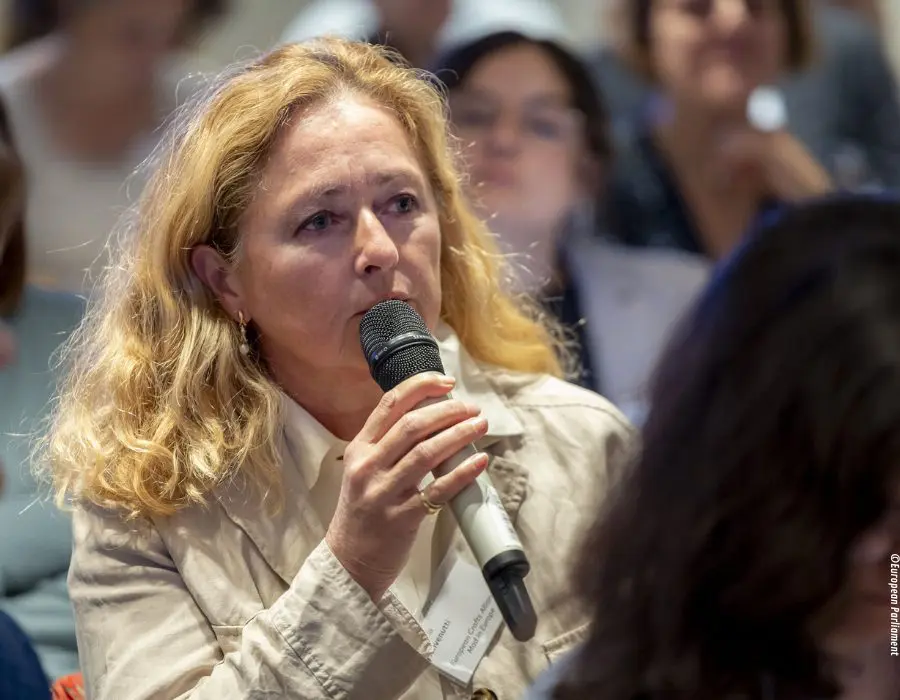
At the High-Level Roundtable on Culture in the Next EU Budget at the European Parliament, Madina Benvenuti spoke on behalf of Mad’in Europe and the European Crafts Alliance (ECA) to call for stronger EU support for crafts. As vital expressions of Europe’s heritage, identity, and sustainability, crafts need urgent policies and funding to ensure their transmission and long-term valorisation.
We are pleased to announce our participation in the Reskilling Crafts project, co-funded by the European Union under the Erasmus+ programme. This European initiative, running from 2025 to 2027, aims to revitalise traditional crafts by developing modern reskilling pathways that equip artisans with digital, green and entrepreneurial skills.
Through Reskilling Labs across Europe, the project will create inclusive spaces where tradition meets innovation. Led by a partnership of nine organisations in training, research and cultural heritage, including Mad’in Europe, the initiative seeks to ensure that Europe’s craftsmanship continues to thrive in the 21st century.
Stay tuned for more information in the next months!
If you want to follow all the latest news, subscribe to the Reskilling Crafts newsletter here
Hugh Roche Kelly, a member of the Mad’in Europe community, has been honoured as one of the artisans selected for the 5th edition of the prestigious Duos en Résonances exhibition. The event connects the worlds of craftsmanship and design, promoting interdisciplinary exchange and creativity.
Well done, Hugh, we can’t wait to see what you do next!
Read more about Hugh’s craft here.
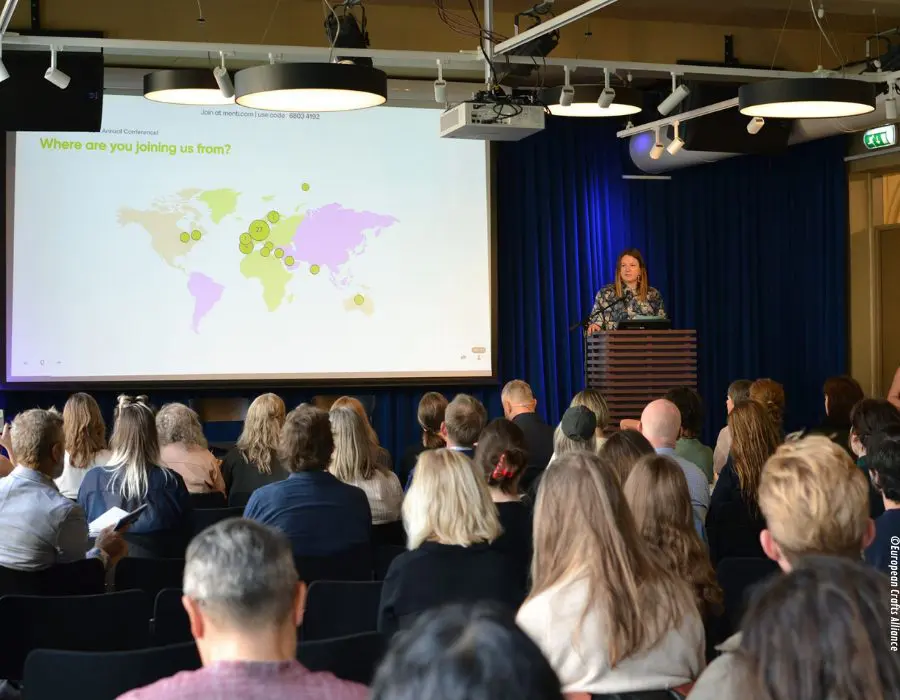
After their successful 2025 conference “Positioning Crafts in the Contemporary Economy” in Oslo, the European Crafts Alliance (ECA) have published their key points. The main conclusions addressed the importance of the institutional recognition of craft, the integration of technology, the role of collaboration, and the sector’s potential to address contemporary societal challenges. These central findings will ultimately guide the strategic direction of ECA in their future activities.
Upcoming Events
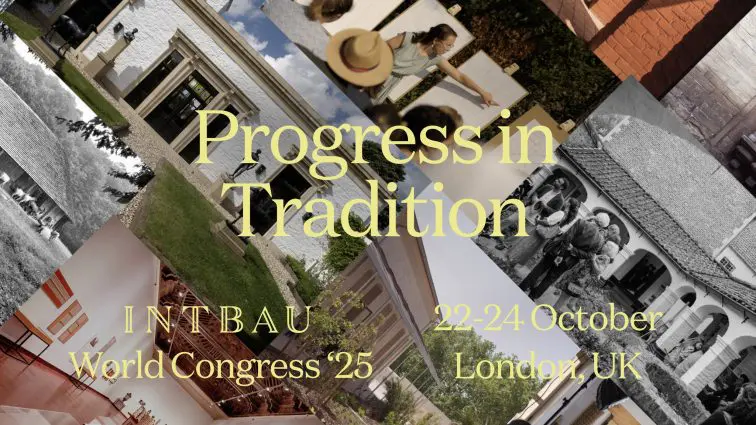
Experts and practitioners from across the globe will gather to reflect on the successes of INTBAU and look to the future of traditional building, architecture and urbanism.
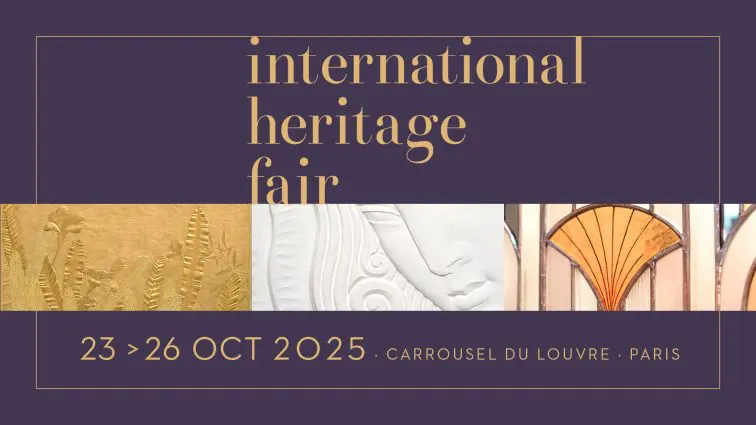
Organised by Ateliers d’Art de France, the Salon International du Patrimoine Culturel is the leading event for the sector. Every year, it welcomes over 300 exhibitors and over 20,000 visitors, from the general public and professionals alike, over 4 days at the Carrousel du Louvre, in Paris.
In 2025, the fair will be held from 23 to 26 October at the Carrousel du Louvre (Paris), for its 30th edition on the theme of ‘Heritage & Art Deco’, to mark the centenary of the 1925 Paris Decorative Arts Exhibition.